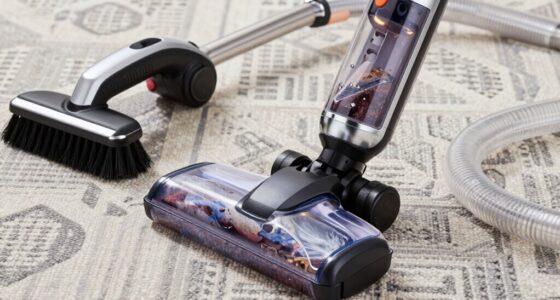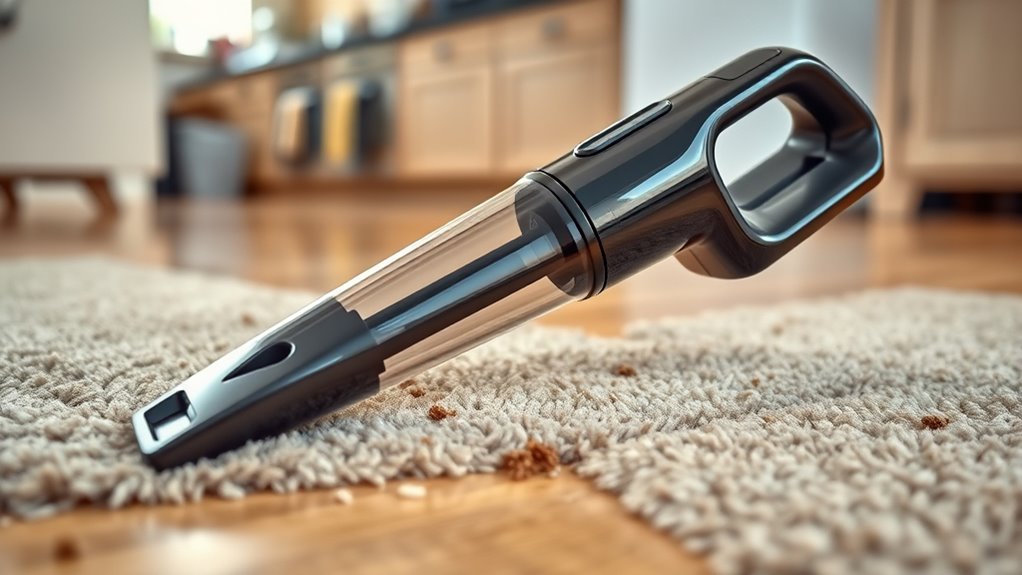

Handheld vacuums are ideal for quick cleanups, such as crumbs on furniture, pet hair, and tight spots that are hard to reach with larger machines. They’re portable and easy to use, making them perfect for small messes and on-the-go tidying. However, their battery life and suction power can limit their usefulness for heavy-duty cleaning. To discover more about maximizing their benefits and understanding their limits, keep exploring this topic further.

Get cleaning gear delivered free — and shop member deals
- Fast, free delivery on millions of items
- Access to Prime Big Deal Days deals on October 6–7
- Prime Video, Amazon Music and more included
Key Takeaways
- Ideal for quick cleanups of crumbs, pet hair, and small messes in tight or hard-to-reach spaces.
- Battery life varies; shorter durations suit quick tasks, while longer ones support extended cleaning.
- Ergonomic designs enhance comfort and maneuverability, reducing user fatigue during use.
- Power and suction performance are crucial for effectively removing stubborn debris and maintaining cleanliness.
- Limitations include shorter runtime and less power compared to full-sized vacuums, making them less suitable for large-scale cleaning.
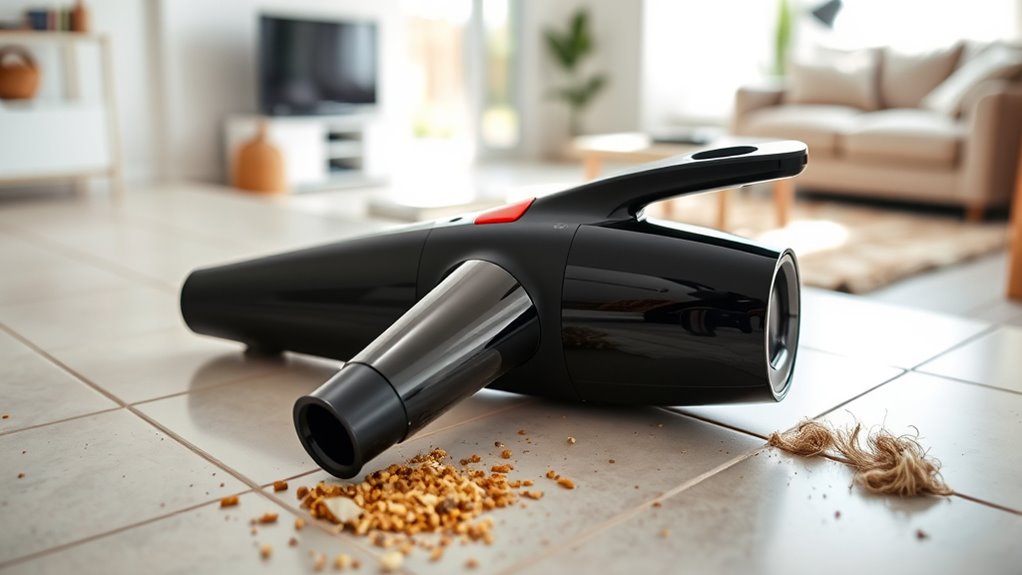
Have you ever needed a quick, convenient way to clean up small messes without dragging out a bulky vacuum? That’s where handheld vacuums shine. These compact devices are perfect for tackling crumbs on the sofa, pet hair on upholstery, or dirt in tight spots. One of the most vital features to consider is battery life. Since handheld vacuums rely on rechargeable batteries, you want one that offers enough runtime to finish your clean-up without constantly needing a recharge. Some models provide just 10 minutes of power, which is suitable for quick jobs, while others can last up to 30 minutes, giving you more flexibility. Keep in mind, though, that longer battery life often means a larger, heavier device, which can impact ease of use.
Speaking of ease of use, the ergonomic design of a handheld vacuum plays a vital role. An ergonomic shape ensures that you can hold and maneuver the device comfortably, reducing fatigue during extended cleaning sessions. Look for models with a balanced weight distribution, a grip that feels natural in your hand, and controls that are easy to access. A well-designed handheld vacuum minimizes strain and lets you reach tricky areas with less effort, making the cleaning process more efficient and less tiresome. Because these vacuums are often used in awkward positions—like reaching under furniture or above head level—an ergonomic design can greatly improve your overall experience. Additionally, powerful suction is essential for picking up stubborn debris and ensuring thorough cleaning.
As an affiliate, we earn on qualifying purchases.
Frequently Asked Questions
Are Handheld Vacuums Suitable for Cleaning Car Interiors?
Yes, handheld vacuums are great for cleaning car interiors. You can use them for quick car detailing and upholstery cleaning, reaching tight spots and removing dust or debris easily. They’re lightweight and portable, making them perfect for on-the-go cleanup. Just make certain your vacuum has enough suction power and appropriate attachments to effectively clean seats, carpets, and tight corners inside your vehicle.
How Long Does the Battery Typically Last on a Handheld Vacuum?
Imagine holding a handheld vacuum, its sleek body ready to tackle messes. Typically, a full charge gives you about 15 to 30 minutes of battery life, depending on the model and power management settings. High suction modes drain the battery faster, so you can conserve power by switching to eco mode. Keep an eye on the battery indicator to avoid surprises and guarantee your cleaning session stays smooth and efficient.
Can Handheld Vacuums Effectively Pick up Pet Hair?
Yes, handheld vacuums can effectively pick up pet hair, especially on carpets and upholstery. They’re great for quick clean-ups and targeting stubborn pet hair in tight spots. Look for models with strong suction and specialized attachments like brushes or pet hair removers. While they work well for small areas and quick carpet cleaning, they may struggle with large messes or deep embedded hair, so consider your cleaning needs.
Are There Handheld Vacuums Designed for Wet and Dry Use?
Yes, some handheld vacuums are designed for wet and dry cleaning. You can use them for wet cleaning spills and dry cleaning tasks like removing dust and debris. These versatile models usually feature a waterproof container and specialized nozzles, making them ideal for quick cleanup in various situations. Just make sure to verify the product specifications to confirm it’s suitable for both wet and dry cleaning before use.
How Often Should I Replace the Filters in My Handheld Vacuum?
Did you know that neglecting filter maintenance can reduce your vacuum’s efficiency by up to 50%? You should replace your handheld vacuum’s filters every 3 to 6 months, depending on usage and dust levels. Following a consistent replacement schedule guarantees peak performance and prolongs your vacuum’s life. Regular filter replacement keeps your device running smoothly and maintains good air quality in your home.
Conclusion
Think of a handheld vacuum as your trusty compass—guiding you through moments of chaos, revealing the hidden messes others miss. While it’s perfect for quick cleanups and tight spots, it’s not a magic wand for every spill. Use it wisely, and it becomes your loyal ally in maintaining a tidy space. Remember, even the brightest stars need the night sky; your vacuum’s true power shines when you know its limits.
Fall Picks
fall essentials
As an affiliate, we earn on qualifying purchases.