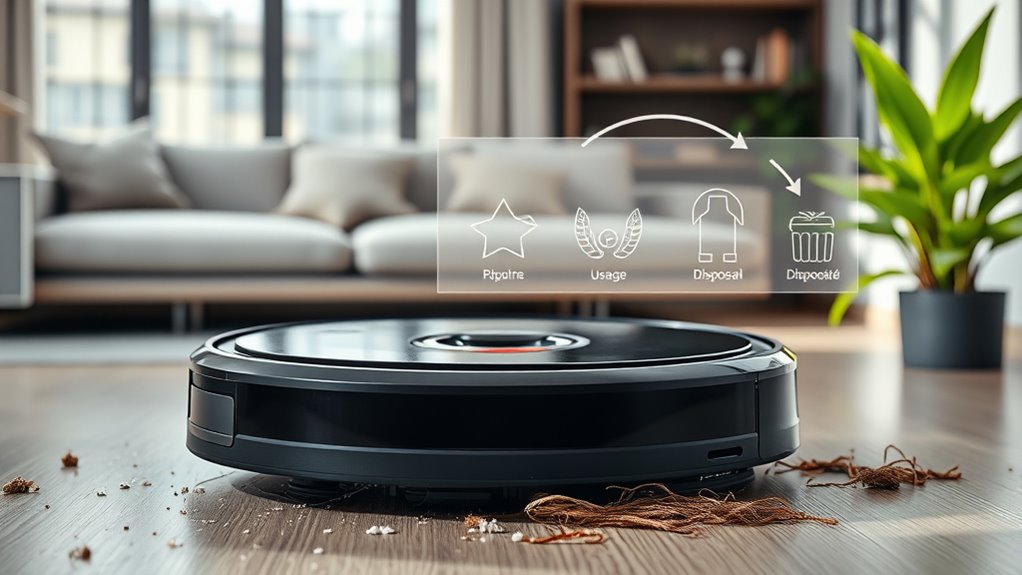

Robotic vacuums impact the environment throughout their life cycle, from extracting raw materials to disposal. They rely on batteries containing toxic elements, but recycling efforts recover valuable materials and reduce hazards. Using sustainable materials and energy-efficient models can lower their footprint. Proper end-of-life management minimizes waste and pollution. Understanding these stages helps you see how choices in manufacturing, use, and disposal make a difference—continue to explore to learn more about their environmental footprint.

Get cleaning gear delivered free — and shop member deals
- Fast, free delivery on millions of items
- Access to Prime Big Deal Days deals on October 6–7
- Prime Video, Amazon Music and more included
Key Takeaways
- The environmental impact depends on battery production, use energy efficiency, and proper end-of-life recycling practices.
- Recycling of lithium-ion batteries recovers valuable materials and prevents soil and water contamination.
- Sustainable materials and durable design extend device lifespan, reducing waste and resource consumption.
- Energy use during operation is minimized through energy-efficient features and renewable energy integration.
- Responsible disposal and recycling at end-of-life help recover resources and prevent environmental pollution.
Robotic vacuums have become popular for their convenience and efficiency, but their environmental impact is worth considering. One of the main concerns is the lifecycle of the device, particularly how its batteries and materials are managed from production to disposal. When you think about battery recycling, it’s clear that proper disposal and reuse of batteries play a vital role in reducing environmental harm. Many robotic vacuums rely on lithium-ion batteries, which contain materials like cobalt, nickel, and lithium. If these batteries aren’t recycled correctly, they can leach toxic chemicals into the soil and water, harming ecosystems and human health. Fortunately, advances in battery recycling technology are making it easier to recover valuable materials and prevent hazardous waste. Proper recycling ensures that rare and finite resources are reused, reducing the demand for mining new materials, which is energy-intensive and environmentally damaging.
Material sustainability is another important aspect of the lifecycle assessment. The production of robotic vacuums involves extracting raw materials, manufacturing components, and assembling the devices. Every step consumes energy and generates waste. To minimize their environmental footprint, manufacturers are increasingly turning to sustainable materials, such as biodegradable plastics, recycled metals, and eco-friendly components. When you choose a robotic vacuum made with sustainable materials, you’re supporting practices that lessen the depletion of natural resources and reduce pollution. Additionally, designing devices that are durable and repairable extends their lifespan, delaying the need for replacement and decreasing waste. This approach aligns with the principles of material sustainability by promoting reuse and reducing the environmental costs associated with manufacturing new devices.
During use, the energy consumption of robotic vacuums also impacts their overall environmental footprint. They are generally energy-efficient, but their power sources matter. If you’re concerned about sustainability, look for models with energy-saving features or those compatible with renewable energy sources. End-of-life management is equally critical. When a robotic vacuum reaches the end of its life, responsible disposal or refurbishment can greatly reduce waste. Recycling programs that focus on extracting usable parts and materials help close the loop, ensuring that the environmental costs are minimized. By prioritizing battery recycling and material sustainability in your choices and disposal habits, you contribute to a more sustainable lifecycle for robotic vacuums, reducing their overall ecological impact. Ultimately, thoughtful management of these devices—from manufacturing to disposal—can help balance the benefits of automation with the need to protect our environment.
As an affiliate, we earn on qualifying purchases.
Frequently Asked Questions
How Do Robotic Vacuums Compare to Traditional Vacuum Cleaners Environmentally?
Robotic vacuums generally have a smaller environmental footprint than traditional ones because they produce fewer manufacturing emissions and use less energy. They’re often designed for easier disposal and recycling, which reduces their disposal impact. Plus, their efficient operation can lower energy consumption over time. So, while both have some environmental effects, robotic vacuums tend to be more eco-friendly, especially if you choose models with sustainable materials and responsible disposal options.
What Materials Are Most Commonly Used in Robotic Vacuum Manufacturing?
You’ll find that robotic vacuums are mainly made from plastics and metals, with plastic being the most common due to its lightweight and moldability. Their battery composition typically includes lithium-ion cells, which power the device efficiently. While plastics help keep the vacuum lightweight, the materials used, especially in batteries, impact the environmental footprint. Recycling and sustainable sourcing can help reduce this impact over the product’s life cycle.
Can Robotic Vacuums Be Recycled at the End of Their Lifespan?
Imagine you’re a time traveler landing in 2024—yes, robotic vacuums can be recycled! At the end of their lifespan, you should dispose of the batteries properly to prevent environmental harm, and many parts like plastics can be recycled. Responsible plastic recycling and battery disposal help reduce waste and pollution, making your robot’s end-of-life more eco-friendly. Just follow local guidelines, and you’ll be doing your part to save the planet.
How Does Energy Consumption Vary Among Different Robotic Vacuum Models?
You’ll find that energy consumption varies among robotic vacuum models based on their battery efficiency and power consumption. Some models use advanced batteries that last longer and consume less energy, making them more eco-friendly. Others may have higher power consumption, cleaning more thoroughly but using more electricity. To choose an efficient model, compare their battery efficiency ratings and power consumption specs, so you can minimize environmental impact while keeping your home clean.
Are There Eco-Friendly Innovations in Robotic Vacuum Design?
Imagine your robotic vacuum gliding silently, powered by a sustainable battery that reduces environmental harm. Many models now incorporate eco-friendly innovations like biodegradable plastics, making them more sustainable. These advancements help minimize waste and energy use, aligning with eco-conscious lifestyles. By choosing vacuums with these features, you support greener technology and reduce your ecological footprint, turning everyday cleaning into an act of environmental care.
Conclusion
As you ponder the journey of your robotic vacuum, remember it’s like a tiny traveler leaving footprints on the Earth’s delicate tapestry. While they make cleaning a breeze, their life-cycle impact is a story of resource use and waste. By choosing wisely and recycling smartly, you can help steer this miniature marvel toward a greener future. Your choices can turn an everyday gadget into a hero that respects our planet’s fragile balance.
Fall Picks
fall essentials
As an affiliate, we earn on qualifying purchases.