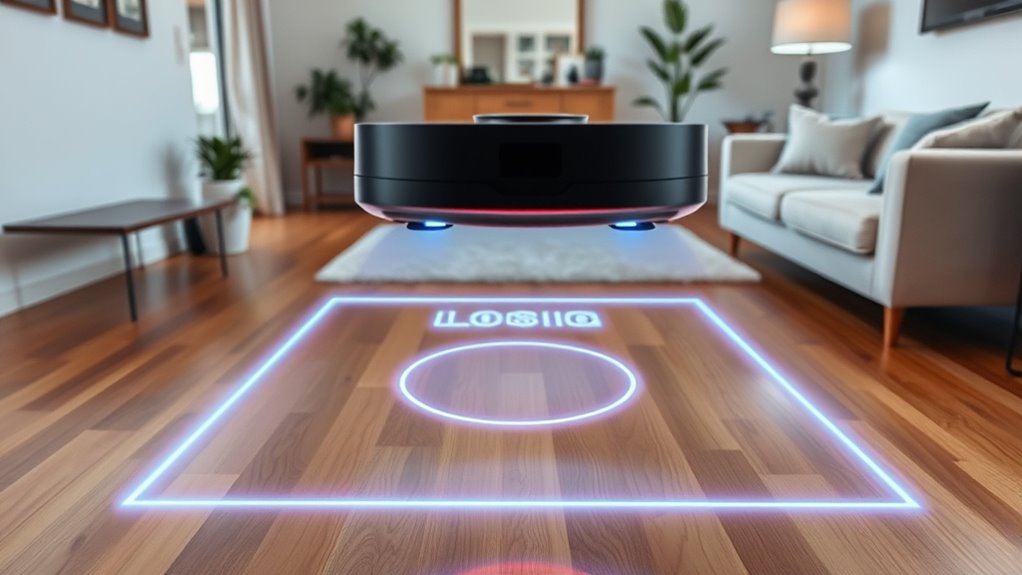

Virtual walls and mapping let you create smart no-go zones for your autonomous devices, helping them navigate safely and efficiently without physical barriers. By integrating sensors like lasers, cameras, and ultrasonic detectors, you can build real-time maps that mark restricted areas and obstacles. These virtual boundaries can be easily adjusted via software, making space management flexible and dynamic. Keep exploring to discover how this technology guarantees seamless, precise navigation and adapts to changing environments.
Key Takeaways
- Virtual walls use sensor data to define no-go zones without physical barriers.
- Mapping creates detailed environmental models, allowing precise placement of virtual boundaries.
- Sensor fusion combines inputs from lasers, cameras, and ultrasonic sensors for accurate obstacle detection.
- Dynamic virtual boundaries can be adjusted via software for flexible space management.
- Continuous map updates ensure reliable, real-time virtual wall enforcement and environment understanding.
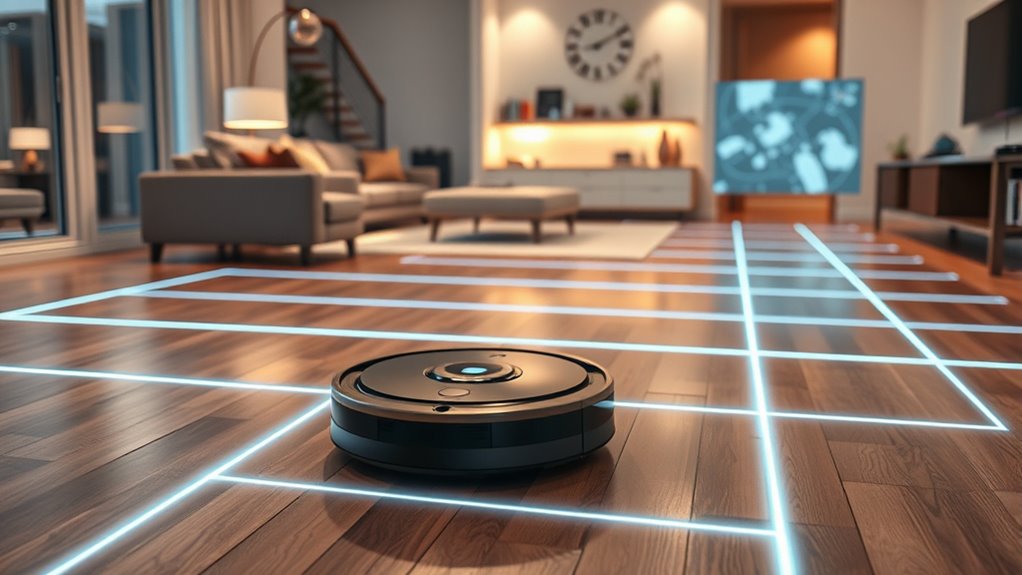
Virtual walls and mapping are vital tools in modern robotics, allowing autonomous devices to navigate complex environments safely and efficiently. These technologies form the backbone of robotic navigation, giving robots the ability to understand their surroundings and make real-time decisions. When you set up virtual walls, you’re fundamentally creating invisible barriers that guide your robot, preventing it from entering restricted areas without the need for physical obstacles. This approach offers a flexible way to manage space, especially in dynamic or delicate environments where physical barriers might be impractical or disruptive.
Virtual walls enable flexible, invisible barriers guiding robots safely without physical obstacles.
The core of this system relies heavily on sensor integration. Your robot combines data from various sensors—like lasers, cameras, ultrasonic sensors, and infrared detectors—to build a detailed map of its environment. This sensor fusion allows the robot to detect obstacles, identify boundaries, and recognize changes in its surroundings. By processing this sensor data, the robot can distinguish between navigable areas and zones you’ve marked as no-go, such as fragile objects, private spaces, or hazardous regions. This continuous integration guarantees that the robot adapts to new obstacles or modifications in the environment, maintaining safe operation at all times.
Mapping plays a vital role in establishing a reliable mental model of the environment. When your robot explores a space, it uses its sensors to create a digital map, marking obstacles, open pathways, and areas to avoid. Virtual walls are then overlaid onto this map, defining no-go zones with precision. These zones can be customized easily through a user interface, giving you control over where your robot should or shouldn’t go. As the robot navigates, it constantly updates its map, refining the virtual walls based on new sensor input. This dynamic mapping ensures that the robot’s understanding remains accurate, even if furniture moves or new obstacles appear.
Implementing virtual walls and mapping not only enhances safety but also improves operational efficiency. Instead of physically blocking off areas, you can swiftly modify virtual boundaries through software, saving time and effort. This flexibility is invaluable for homes and workplaces where layouts frequently change. You’ll find that sensor integration is key to making this system work seamlessly. When all sensors work harmoniously, the robot’s navigation becomes more precise, reducing the risk of collisions and ensuring it adheres strictly to your designated no-go zones.

iRobot Roomba Authentic Replacement Parts – Dual Mode Virtual Wall Barrier Compatible with Roomba 600 700 800 900 Series, Black – 4636429
1-pack Dual Mode Virtual Wall Barrier gives you greater control over where your robot cleans
As an affiliate, we earn on qualifying purchases.
As an affiliate, we earn on qualifying purchases.
Frequently Asked Questions
Can Virtual Walls Be Customized for Different Home Areas?
Yes, virtual walls can be personalized for different home areas. You can use customization options to set area-specific settings, allowing you to define no-go zones precisely where you need them. This flexibility helps you tailor your robot vacuum’s cleaning pattern to your home’s unique layout. By adjusting these settings, you guarantee your device avoids certain spaces while cleaning effectively, giving you more control over its operation.
How Do Virtual Walls Affect Robot Vacuum Navigation?
Virtual walls veer your vacuum’s voyage, limiting its landscape. You’ll want to take into account sensor placement carefully, as poor positioning can cause signal interference, confusing the robot’s navigation. When virtual walls are active, they direct the device, preventing it from entering restricted zones. This strategic setup ensures your vacuum efficiently cleans designated areas while avoiding obstacles, making your home smarter and your cleaning routine smoother.
Are Virtual Walls Compatible With All Robot Vacuum Brands?
Virtual walls aren’t compatible with all robot vacuum brands due to virtual wall limitations and brand compatibility issues. You’ll find that some brands, like iRobot, support virtual wall features, while others don’t. Always check your vacuum’s specifications before purchasing virtual walls. If your vacuum doesn’t support them, you might need alternative methods, like magnetic strips or app-based no-go zones, to customize your cleaning areas effectively.
What Maintenance Do Virtual Wall Devices Require?
You need to regularly perform a virtual wall setup check to guarantee it functions properly. Keep the device clean by wiping it with a dry cloth and check the batteries or power source for any issues. Follow a maintenance checklist that includes updating firmware if needed and inspecting for physical damage. This helps your virtual wall device stay reliable, so your robot vacuum can accurately avoid designated no-go zones.
Can Virtual Walls Be Temporarily Disabled or Moved?
Yes, you can temporarily deactivate virtual walls or move them. Most devices allow for easy temporary deactivation through their app, giving you flexibility when needed. To relocate a virtual wall, simply update its position in the app, enabling wall relocation without hassle. This way, you can adapt your cleaning zones quickly, whether you want a temporary deactivation or to change the virtual wall’s placement for better coverage.

AUTONOMOUS ROBOT PERCEPTION SYSTEMS: Sensor Fusion Mapping Localization and Real Time Environmental Understanding
As an affiliate, we earn on qualifying purchases.
As an affiliate, we earn on qualifying purchases.
Conclusion
Imagine your robot vacuum as a diligent gardener, carefully marking off no-go zones like invisible fences to protect delicate plants. With virtual walls and mapping, you’re guiding your smart home’s assistant to navigate seamlessly, avoiding obstacles and creating a harmonious space. Just as a gardener tends to each corner, you’re shaping your environment with precision. This technology transforms chaos into order, making your home smarter and safer—one virtual boundary at a time.

KKXYDMV Compatible for Roborock S50 E5 S5 Max S6 S7 Laser Distance Sensor Robot Vacuum Cleaner LDS Replacement Accessories LDS02RR
Premium Quality: This replacement laser distance sensor ensures high performance and reliability. It's durable and provides precise navigation…
As an affiliate, we earn on qualifying purchases.
As an affiliate, we earn on qualifying purchases.

ELEGOO 5PCS HC-SR04 Ultrasonic Module Distance Sensor Compatible with Arduino UNO MEGA Nano Robot XBee ZigBee
Ultrasonic hc-sr04 distance measuring transducer sensor
As an affiliate, we earn on qualifying purchases.
As an affiliate, we earn on qualifying purchases.