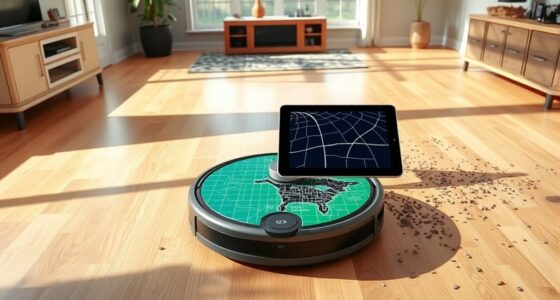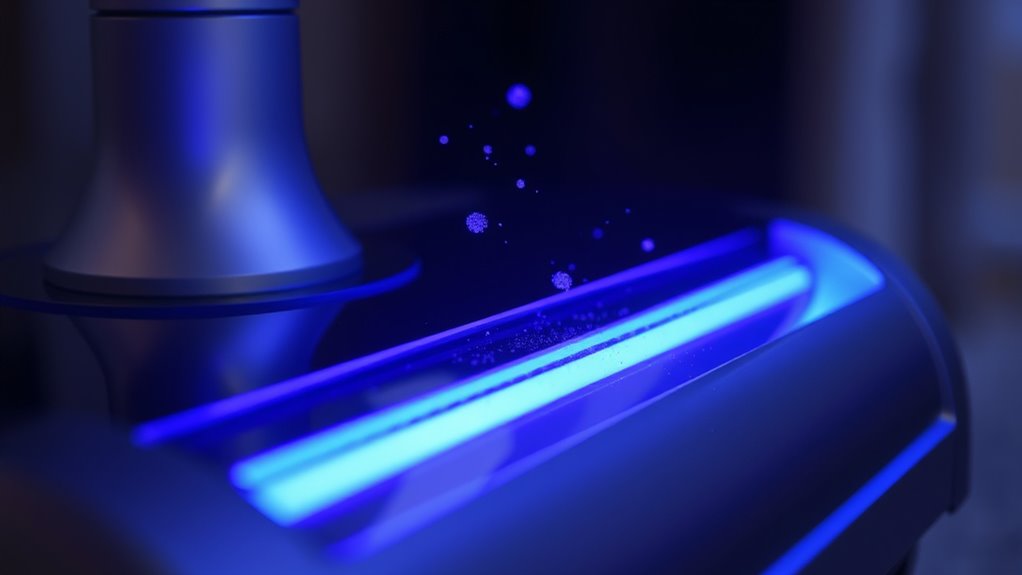

UV-C light in vacuums is a proven technology that actively destroys airborne and surface microbes, making it more effective than traditional filters that only trap bacteria and viruses temporarily. It reduces microbial buildup, enhances air quality, and creates safer environments, especially for allergy sufferers or immunocompromised individuals. While safety precautions are essential, UV-C is not just a hype—it can be a real health booster when integrated properly. Keep going to uncover how this tech can transform your cleaning routine.
Key Takeaways
- UV-C light effectively inactivates bacteria, viruses, and mold spores, enhancing vacuum sterilization capabilities.
- When integrated with air filtration, UV-C improves indoor air quality by actively neutralizing airborne microbes.
- UV-C vacuums offer a significant advantage over traditional filters by destroying microbes rather than just trapping them.
- Proper safety measures are essential, as direct UV-C exposure can be harmful; devices often include shielding and automatic shutoffs.
- Scientific evidence supports UV-C’s role as a health-enhancing tool in comprehensive cleaning routines, not just a hype.
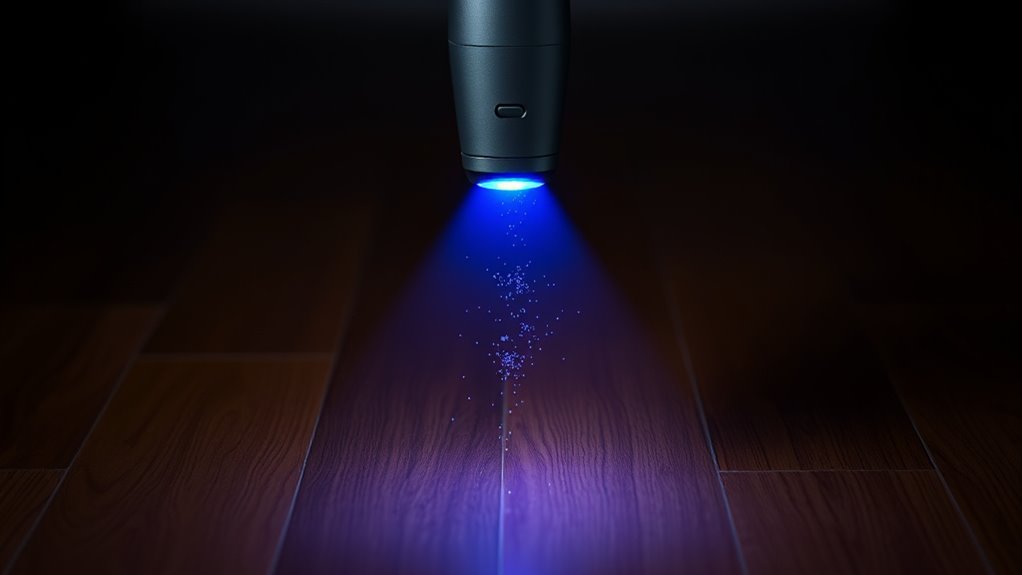
UV-C light has proven to be highly effective in sterilizing environments, especially in vacuum conditions where traditional sterilization methods can be limited. When integrated into vacuum systems, UV-C technology enhances air filtration by actively targeting airborne particles, including bacteria, viruses, and mold spores. This means that as your vacuum operates, it doesn’t just pick up dirt and debris; it also helps eliminate microorganisms from the air you breathe. The UV-C light works by damaging the DNA and RNA of bacteria and other pathogens, rendering them inactive or dead before they can cause harm. This bacterial elimination process is essential in maintaining a cleaner, healthier environment, especially in spaces prone to microbial buildup. Additionally, UV-C technology can be integrated with air purification systems to further improve overall indoor air quality.
UV-C light effectively sterilizes environments by damaging microorganisms, enhancing air quality in vacuum systems.
Incorporating UV-C into vacuum systems offers a notable advantage over conventional vacuums that rely solely on physical filtration. Traditional filters can trap bacteria and viruses temporarily, but they don’t necessarily kill them. UV-C light, on the other hand, actively destroys these microorganisms, reducing the likelihood of cross-contamination and microbial spread. As a result, your space becomes safer, with less risk of infection or allergic reactions triggered by airborne pathogens. The combination of vacuum suction and UV-C sterilization creates a dual mechanism—physically capturing debris and biologically neutralizing harmful microbes—that’s far more effective at improving indoor air quality.
You might wonder if UV-C technology is just hype or genuinely beneficial. The scientific evidence supports its efficacy, especially for air filtration and bacterial elimination. When UV-C light is correctly integrated into vacuum cleaners, it can considerably reduce microbial load in a room. This is particularly important for households with children, allergy sufferers, or immunocompromised individuals, where controlling airborne bacteria and viruses is essential. Moreover, UV-C-equipped vacuums are simple to use; you don’t need to do anything differently—just run the vacuum as usual, and the UV-C light does its job in the background, continuously sterilizing the air and surfaces.
However, it’s worth noting that UV-C light isn’t a standalone solution for complete sterilization. It works best as part of an extensive approach that includes good cleaning practices and proper filter maintenance. Also, UV-C light can be harmful if directly exposed to skin or eyes, so safety features like shields and automatic shutoffs are critical. When used correctly, UV-C in vacuums offers a promising way to improve air quality by actively eliminating bacteria, making your cleaning routine more effective and your indoor environment healthier.
Frequently Asked Questions
How Long Does UV-C Light Typically Last in Vacuum Devices?
You might wonder how long UV-C light lasts in vacuum devices. Typically, the UV lamp lifespan ranges from 8,000 to 10,000 hours, depending on the quality and usage. The UV bulb durability is vital, as it determines how effective the device remains over time. Proper maintenance can extend the UV bulb’s life, ensuring continued germicidal benefits without frequent replacements.
Are All Vacuum Models Equally Effective With UV-C Technology?
Imagine you’re choosing between two vacuum models, one with UV‑C technology and one without. Not all vacuums are equally effective with UV‑C; compatibility varies based on design and UV‑C bulb longevity. Some models optimize UV‑C placement and power, boosting effectiveness, while others don’t. Always check the specifications for UV‑C compatibility to guarantee you get the most benefit, avoiding models that might have shorter bulb life or poor integration.
Can UV-C Light Damage Vacuum Parts Over Time?
You might wonder if UV-C light can harm your vacuum over time. While it’s effective at disinfecting, UV degradation can affect some vacuum parts, especially plastics and rubber components. Prolonged exposure may weaken vacuum durability, leading to cracks or brittleness. However, quality designs incorporate UV-resistant materials to minimize this risk. So, if used properly, UV-C light shouldn’t markedly damage your vacuum’s longevity.
Is UV-C Cleaning Safe for Allergy Sufferers?
You might wonder if UV-C cleaning is safe for allergy sufferers. It can offer allergy relief by reducing allergens like mold and bacteria, helping your immune support. When used correctly, UV-C light in vacuums can be effective without harming you. However, avoid direct exposure, as UV-C can damage skin and eyes. Proper use guarantees you get the benefits without risking your health.
What Are the Environmental Impacts of UV-C Vacuum Use?
You might wonder about the environmental impacts of UV-C vacuum use. UV-C light can generate ozone, which may harm indoor air quality and contribute to pollution if not managed properly. Additionally, UV-C technology often consumes more energy than traditional vacuums, increasing your carbon footprint. While it can improve cleaning, consider these factors to balance health benefits with environmental responsibility.
Conclusion
So, as you consider UV-C light in vacuums, remember the myth of Icarus—flying too close to the sun. While it promises to banish germs like a modern-day Prometheus, it’s essential to stay cautious. This technology holds potential, but don’t let the hype blind you. Use it wisely, like a lantern in the dark, guiding you without overreaching. Ultimately, knowledge is your shield in this radiant fight for health.