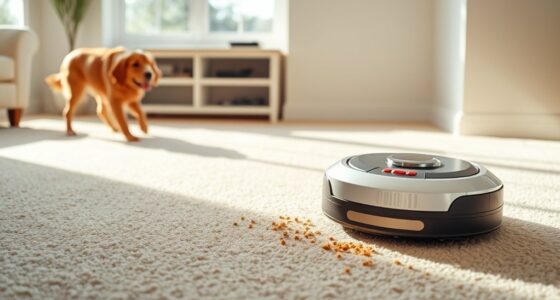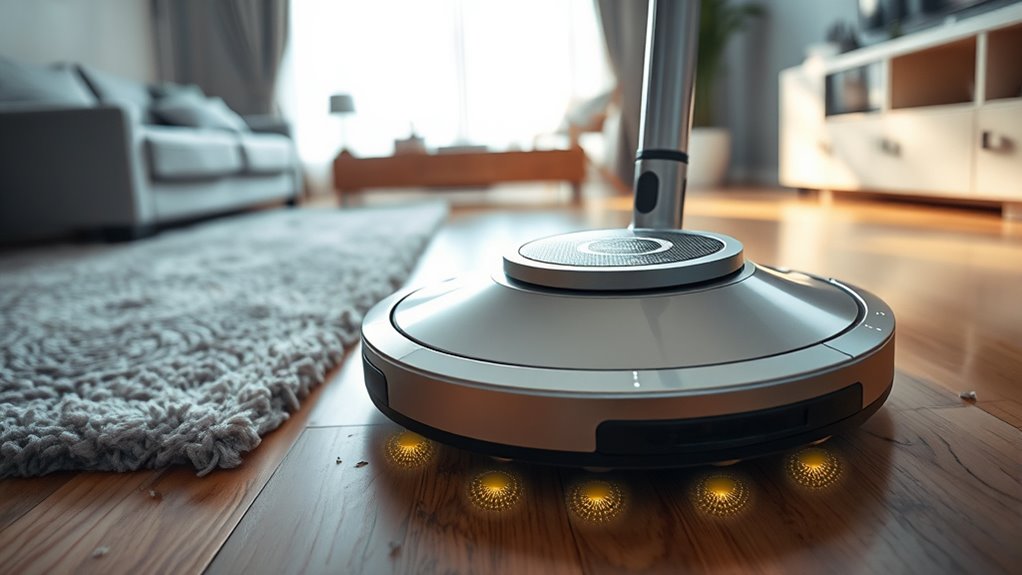
Multi-surface sensors are a key part of the future of smart vacuums, allowing you to detect and adapt to different floor types seamlessly. These sensors help your device recognize surfaces like hardwood, tile, or carpet in real-time, making cleaning more efficient and preventing damage. Proper calibration guarantees they work accurately over time, boosting performance and longevity. Continuing to explore this topic will reveal how advancements will make your smart vacuum even smarter and more adaptable.
Key Takeaways
- Multi-surface sensors enable smart vacuums to accurately detect and adapt to different floor types for optimized cleaning.
- Future advancements will improve sensors’ ability to recognize finer surface distinctions, enhancing cleaning precision.
- Proper calibration maintains sensor accuracy, ensuring consistent obstacle detection and surface recognition over time.
- Enhanced sensors will facilitate smarter navigation, obstacle avoidance, and efficient cleaning routes.
- Continuous sensor development will expand the capabilities of autonomous vacuums for more intelligent and efficient operation.
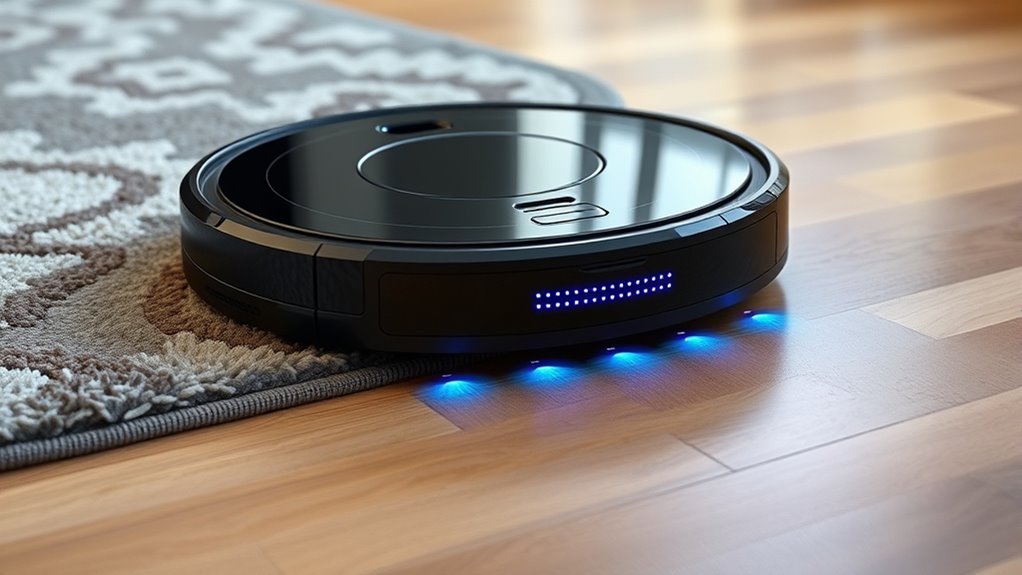
Multi-surface sensors are versatile devices designed to detect and measure physical properties across various materials and environments. When you’re using a smart vacuum with these sensors, you’re leveraging technology that can adapt seamlessly to different floor types, whether it’s hardwood, tile, or carpet. These sensors play a pivotal role in robot navigation, allowing your vacuum to understand its surroundings accurately. As your device moves around, it relies on multi-surface sensors to identify obstacles, changes in surface texture, and the boundaries of each room. This real-time data enables the vacuum to plan efficient cleaning paths, avoid bumping into furniture, and transition smoothly between different floor types without missing spots or causing damage.
Proper sensor calibration is essential to guarantee these devices operate at peak performance. When the sensors are correctly calibrated, your smart vacuum can distinguish between various surfaces with greater precision, adjusting its cleaning intensity and techniques accordingly. For example, it might increase suction power on thicker carpets or slow down on delicate hardwood floors. Calibration involves fine-tuning the sensors so that their readings accurately reflect the physical properties of the surfaces they encounter. This process often requires initial setup, where you might need to follow specific instructions to calibrate the sensors during the first use or after maintenance. Regular calibration checks help maintain maximum performance, especially since dust, debris, or accidental bumps can affect sensor accuracy over time.
Your vacuum’s ability to navigate complex environments hinges on the quality of its multi-surface sensors and their calibration. When these sensors work correctly, you benefit from a more intelligent cleaning experience. The device can distinguish between different textures, adapt its cleaning patterns, and avoid unnecessary re-tracking over already cleaned areas. This not only saves time but also extends the lifespan of your vacuum by reducing unnecessary motor strain. In addition, well-calibrated sensors improve obstacle detection, preventing your device from getting stuck or causing damage to furniture. Energy efficiency is also enhanced when the sensors enable the vacuum to optimize cleaning routes and avoid unnecessary movements.
Ultimately, these sensors are a cornerstone of modern smart vacuums, making them more autonomous and efficient. As technology advances, expect even smarter sensors that can recognize finer surface differences and adapt faster. Your role is to guarantee they stay properly calibrated, so your vacuum continues to operate with precision. By understanding how multi-surface sensors function and the importance of sensor calibration, you’ll maximize your device’s capabilities, ensuring cleaner floors and a more effortless cleaning routine.

Tineco Floor ONE S3 Cordless Hardwood Floors Cleaner, Lightweight Wet Dry Vacuum Cleaners for Multi-Surface Cleaning with Smart Control System
- Smart Sensor Technology: Detects wet/dry messes and adjusts automatically
- All-in-One Cleaning: Vacuum and wash in one step
- Cordless & Lightweight: Easy to maneuver and use
As an affiliate, we earn on qualifying purchases.
As an affiliate, we earn on qualifying purchases.
Frequently Asked Questions
How Do Multi-Surface Sensors Differ From Traditional Sensors?
You might wonder how multi-surface sensors differ from traditional sensors. These advanced sensors use surface recognition technology to identify different flooring types instantly, adjusting the vacuum’s settings accordingly. Unlike traditional sensors, which often require manual sensor calibration and have limited surface detection, multi-surface sensors automatically calibrate themselves for best cleaning. This guarantees your vacuum adapts seamlessly to various surfaces, providing a more effective and efficient cleaning experience.
Are Multi-Surface Sensors Compatible With All Vacuum Brands?
Bridging brand barriers, multi-surface sensors blend seamlessly with many vacuum brands, but compatibility isn’t universal. You’ll want to check each brand’s sensor integration capabilities before upgrading. While some brands boast broad compatibility, others may need specific sensor systems. So, you’re wise to verify brand compatibility first, ensuring your smart vacuum’s sensors sync smoothly with your device, delivering precise cleaning power across surfaces.
What Maintenance Is Required for Multi-Surface Sensors?
You should regularly maintain your multi-surface sensors by checking for dust or debris that could block them. Keep the sensors clean with a soft, dry cloth, and perform sensor calibration if your vacuum prompts it. Additionally, guarantee you install any software updates from the manufacturer, as they often include improvements and bug fixes for sensor performance. Proper maintenance helps your smart vacuum navigate accurately and clean effectively.
Can Sensors Distinguish Between Pet Hair and Dust?
You might think your smart vacuum’s sensors can spot pet hair from space, but they actually use advanced pet hair detection technology. While they’re impressive, they can’t always perfectly distinguish pet hair from dust. Regular sensor calibration helps improve accuracy, ensuring your vacuum knows the difference. Keep in mind, though, some fine dust and pet hair might still get mixed, so manual checks can be helpful for supreme cleaning.
How Accurate Are Multi-Surface Sensors in Cluttered Environments?
In cluttered environments, multi-surface sensors can be quite accurate if properly calibrated. However, sensor calibration is key; it guarantees the sensors correctly interpret different surfaces. Environmental interference, like pet hair, cords, or uneven flooring, can affect their performance. While they excel in controlled settings, cluttered spaces may cause slight inaccuracies, so regular calibration and mindful placement help improve their detection and cleaning efficiency.
Conclusion
As you can see, multi-surface sensors are transforming smart vacuums, making them more efficient and adaptable. These sensors can detect different floor types instantly, ensuring ideal cleaning every time. In fact, studies show that vacuums with advanced sensors clean 30% more effectively than traditional models. With this technology, you’ll enjoy a smarter, more thorough clean—saving you time and effort. Embrace the future of cleaning and experience the convenience that multi-surface sensors bring to your home.