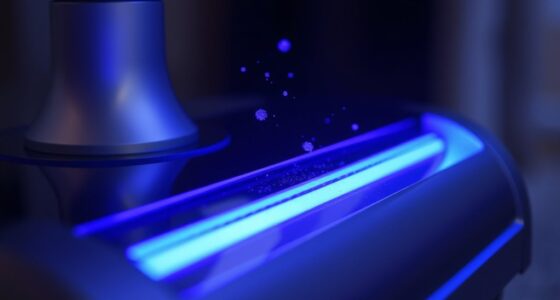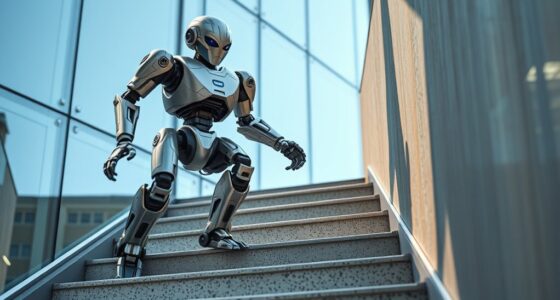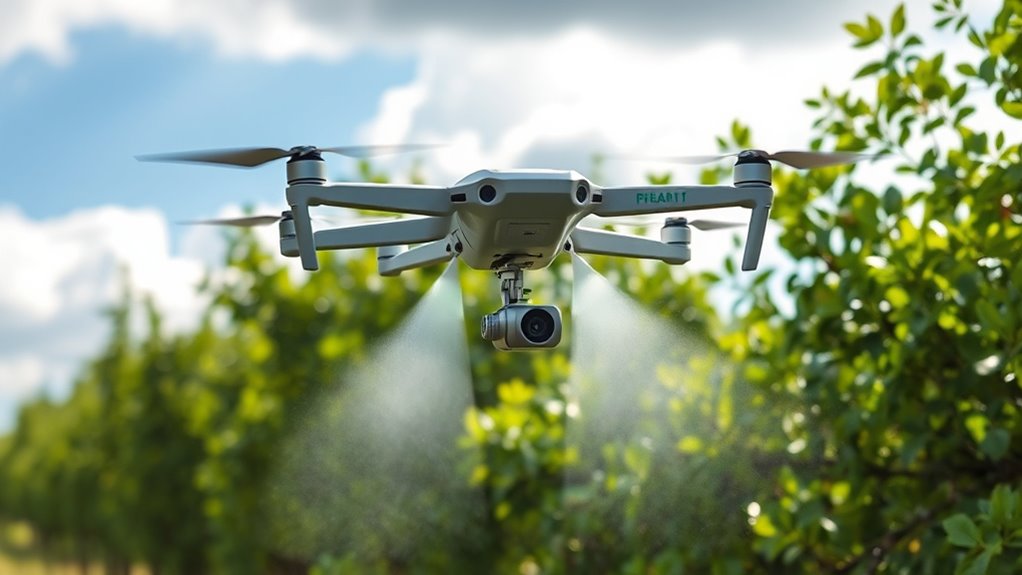

Drones for dusting are quickly becoming the future of aerial cleaning. They can navigate large and complex areas autonomously, avoiding obstacles and adapting to changing environments with sensors and cameras. These robots improve efficiency, reduce labor costs, and keep humans safe by reaching high or difficult spots. As technology advances, expect smarter, safer drones to lead the way in surface maintenance. Keep exploring to discover how this innovative solution is transforming cleaning methods.

Get cleaning gear delivered free — and shop member deals
- Fast, free delivery on millions of items
- Access to Prime Big Deal Days deals on October 6–7
- Prime Video, Amazon Music and more included
Key Takeaways
- Autonomous drones efficiently cover large and complex areas, making them ideal for dusting tasks.
- Advanced sensors and obstacle detection ensure safe, precise cleaning in various environments.
- Drones reduce labor costs and human exposure to dust, enhancing safety and operational efficiency.
- Industry applications include manufacturing, warehousing, and agriculture, demonstrating versatile use cases.
- Continuous technological improvements are making aerial cleaning robots a promising, future-ready solution.

Have you ever wondered how drones are transforming dusting processes across various industries? These flying robots are quickly becoming essential tools in maintaining cleanliness and efficiency, thanks to advances in technology like autonomous navigation. With autonomous navigation, drones can independently map out spaces, avoid obstacles, and adapt to changing environments without constant human intervention. This capability means they can perform dusting tasks in large, complex areas with minimal oversight, reducing labor costs and increasing consistency. As they move through facilities, drones use sensors and cameras to detect surfaces that need cleaning, ensuring no spot is missed, even in hard-to-reach places. Their ability to operate autonomously allows for scheduled, regular dusting routines, keeping environments cleaner and safer.
However, integrating drones into dusting tasks isn’t just about technology; safety protocols are equally critical. Industry standards and safety measures must be in place to prevent accidents or damage. Before deploying drones, you need to establish clear guidelines on flight paths, restricted zones, and emergency procedures. This includes setting up geofencing to keep drones within designated areas and implementing fail-safe systems that automatically land or hover if a malfunction occurs. Proper training for operators is essential to monitor drone activity, troubleshoot issues, and ensure compliance with safety regulations. These safety protocols not only protect personnel and equipment but also build trust in drone technology as a reliable solution for dusting.
You’ll find that the combination of autonomous navigation and strict safety protocols makes drones a powerful asset in industries like manufacturing, warehousing, and agriculture. They can quickly cover large surfaces, reach high or awkward spots, and perform consistent dusting routines that manual labor might struggle to maintain over time. This automation reduces the risk of human error and minimizes exposure to dust or other contaminants for workers. Additionally, drones equipped with safety features can pause or return to base if obstacles are detected or if weather conditions deteriorate, ensuring operations remain safe and controlled.
In essence, drones are poised to revolutionize dusting practices by offering precise, autonomous, and safe cleaning solutions. As technology continues to evolve, expect even smarter drones that can adapt to various environments seamlessly. Their ability to navigate autonomously and adhere to safety protocols positions them as the next step in efficient, reliable dusting methods. If you’re considering upgrading your cleaning processes, integrating drone technology could be a game-changer, providing a safer, more effective approach to maintaining pristine environments.
As an affiliate, we earn on qualifying purchases.
Frequently Asked Questions
How Long Do Drone Batteries Typically Last During Dusting Tasks?
You’ll find that drone batteries typically last around 15 to 30 minutes during dusting tasks, depending on the model and power endurance. High-quality batteries with better battery lifespan can extend this time, but most drones are designed for short, efficient cleaning sessions. Keep in mind that frequent recharging might be necessary, especially if you’re covering large areas. Proper maintenance can also help maximize your drone’s power endurance.
Can Drones Be Safely Used Indoors for Dusting?
Yes, drones can be safely used indoors for dusting if you prioritize indoor safety and dust containment. Make sure the drone is equipped with sensors to prevent collisions and has proper dust containment features to minimize mess. Always supervise the drone during operation, and ensure the space is clear of obstacles. Proper training and maintenance are essential to keep the process safe and effective for indoor dusting tasks.
What Are the Legal Restrictions for Drone Dusting Operations?
Imagine flying through a city with a clear map—that’s how drone dusting faces legal restrictions. You must guarantee regulatory compliance, like FAA rules, local ordinances, and airspace permissions. Privacy concerns are also key; you don’t want to invade someone’s space or breach confidentiality. Before deploying, check all regulations, obtain necessary permits, and respect privacy laws to avoid fines or legal trouble. Staying compliant keeps your drone dusting operation safe and effective.
How Effective Are Drones Compared to Traditional Dusting Methods?
Drones excel in precision cleaning, targeting hard-to-reach areas that traditional dusting often misses. You’ll notice they provide accessibility benefits, making cleaning faster and more efficient in tight or elevated spaces. While traditional methods are reliable, drones offer a high-tech alternative that can reduce labor and improve thoroughness. Overall, drones are highly effective, especially for large or complex surfaces, giving you a modern solution that enhances cleaning results.
What Maintenance Do Drone Dusting Robots Require?
You’ll need to regularly calibrate your drone dusting robot to guarantee optimal performance, just like tuning a musical instrument. Maintenance involves checking and cleaning dust collection efficiency components, replacing filters, and inspecting propellers for damage. Keeping the robot’s sensors and calibration up to date helps prevent malfunctions. Frequent maintenance ensures your drone operates smoothly, maintains efficiency, and extends its lifespan, making dusting more effective and less problematic over time.
Conclusion
As drones take to the skies for dusting, they’re opening a new chapter in cleaning technology. Imagine these aerial robots as your personal fleet of tiny, tireless elves, sweeping and dusting effortlessly from above. It’s clear that the future of cleaning is soaring high, blending innovation with convenience. As these drones become more common, they’ll transform dusting from a chore into a breeze, lifting the burden off your shoulders like a gentle gust of wind.
Fall Picks
fall essentials
As an affiliate, we earn on qualifying purchases.