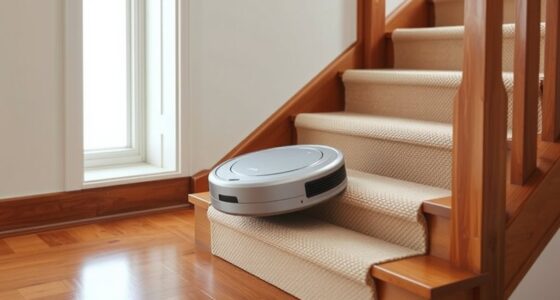
Market trends show that robot vacuums are becoming essential for commercial spaces, thanks to rapid technological advances and increasing demand for efficient cleaning. These devices offer adaptable, customizable solutions, reducing labor costs and ensuring consistent cleanliness. Many models now feature smart controls and obstacle navigation, making them suitable for busy environments like offices, retail stores, and warehouses. As this trend continues to grow, you’ll find more innovative options that can transform your cleaning routine, if you explore further.
Key Takeaways
- Growing adoption of smart robot vacuums in various commercial sectors driven by automation benefits.
- Increased model sophistication with advanced sensors and app controls enhances adaptability for complex environments.
- Rising demand for cost-effective cleaning solutions reduces long-term operational expenses.
- Market expansion influenced by technological advancements and increased emphasis on hygiene standards.
- Trends show a shift towards integrated maintenance features to ensure optimal performance and longevity.
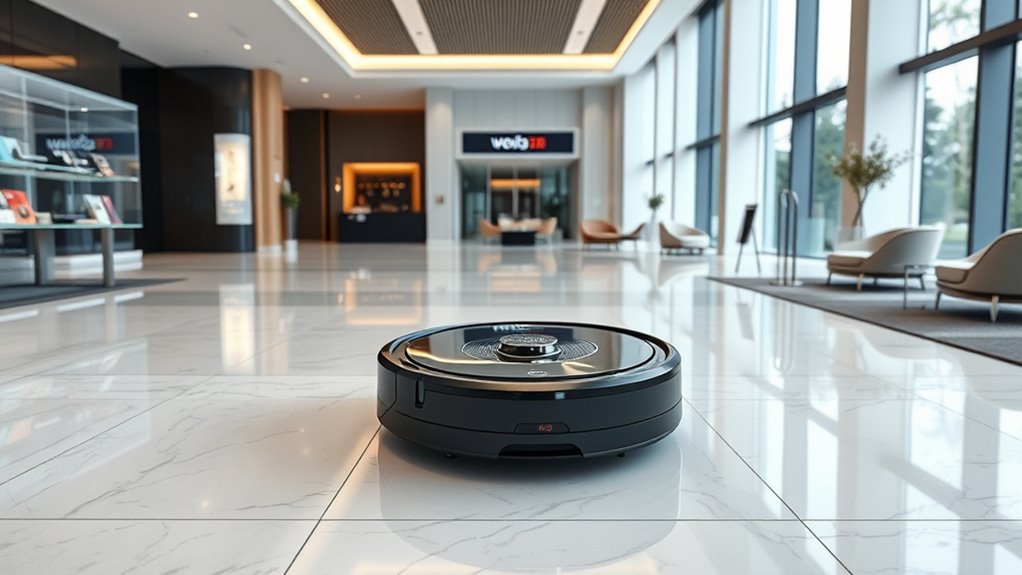
Robot vacuums are transforming how businesses maintain cleanliness, offering an efficient and cost-effective solution for commercial spaces. As you consider integrating these devices into your cleaning routine, it’s important to understand the maintenance challenges involved. Unlike traditional cleaning methods, robot vacuums require regular upkeep to guarantee optimal performance. You’ll need to keep sensors and brushes clean, replace filters periodically, and update software when necessary. Although these tasks might seem like added responsibilities, they’re generally straightforward and less labor-intensive than manual cleaning. Proper maintenance ensures your robot vacuum operates smoothly and extends its lifespan, ultimately saving you money in the long run.
When weighing the benefits of robot vacuums, a thorough cost benefit analysis becomes essential. While the initial investment might seem significant, you need to evaluate the ongoing savings. Traditional cleaning involves staffing costs, time, and the purchase of cleaning supplies and equipment. Robot vacuums reduce labor expenses because they work autonomously, freeing up staff to focus on other tasks. Additionally, they operate during off-hours, meaning your space stays clean without interrupting your daily operations. Over time, these efficiencies translate into lower operational costs. You’ll also find that robot vacuums help maintain a higher standard of cleanliness, which can positively impact your business’s image and customer satisfaction.
Furthermore, robot vacuums are adaptable to various commercial environments, from offices and retail stores to warehouses and restaurants. Their ability to navigate complex layouts and avoid obstacles minimizes the need for constant human supervision. This flexibility not only cuts costs but also enhances productivity, as cleaning becomes more consistent and less disruptive. You’ll appreciate that many models now come with smart features, such as app control and scheduling, allowing you to customize cleaning routines easily. These technological advancements make robot vacuums an even more attractive investment, especially when you compare their maintenance and operational costs with traditional cleaning methods.
Despite the initial setup, many businesses find that robot vacuums pay for themselves quickly through reduced labor and maintenance costs. The key is to select models that suit your specific needs and to establish a regular maintenance routine. By doing so, you’ll address potential maintenance challenges proactively and maximize the benefits. When you perform a comprehensive cost benefit analysis, it becomes evident that robot vacuums are not just a trend but a practical, economical choice for maintaining cleanliness in busy commercial spaces. They also depend on a stable beach environment with wave and wind action to prevent erosion and keep the area clean and safe.
Frequently Asked Questions
How Do Robot Vacuums Handle Large Debris in Commercial Settings?
Robot vacuums handle large debris in commercial settings by using powerful debris collection systems designed for tough messes. They navigate obstacles efficiently with advanced obstacle navigation technology, ensuring they don’t get stuck or miss spots. You’ll find that regular maintenance helps keep their debris collection ideal, and their ability to adapt to different debris sizes makes them reliable for cleaning large debris in busy commercial environments.
What Safety Features Are Essential for Robot Vacuums in Busy Environments?
You need robot vacuums with essential safety features like obstacle detection, emergency stop functions, and anti-collision sensors to prevent accidents. Implement emergency protocols and provide user training so staff knows how to respond if issues arise. These measures guarantee safe operation in busy environments, reducing risks and maintaining smooth cleaning processes. Prioritize models with these safety features to keep everyone protected and your workspace secure.
Can Robot Vacuums Be Integrated With Existing Commercial Cleaning Systems?
Yes, robot vacuums can be integrated with your existing commercial cleaning systems. However, you might face some integration challenges and compatibility issues, especially with older equipment or proprietary systems. To guarantee smooth operation, check the robot vacuum’s compatibility with your current setup and consider consulting with manufacturers or specialists. Proper planning and choosing adaptable models help you streamline cleaning processes and maximize efficiency.
What Is the Typical Lifespan of a Commercial-Grade Robot Vacuum?
A commercial-grade robot vacuum typically lasts around 3 to 5 years, depending on usage and maintenance. You should consider battery longevity, as batteries may need replacement after 1 to 2 years of heavy use. Check warranty coverage, which often includes repairs or replacements for defects. Regularly maintaining the device guarantees it performs efficiently and extends its lifespan, helping you get the most value from your investment.
How Do Robot Vacuums Perform on Different Flooring Types in Commercial Spaces?
Your robot vacuum acts like a chameleon, adapting seamlessly to various flooring types. With excellent surface adaptability and flooring compatibility, it cleans carpets, tiles, and hardwood floors efficiently. Its sensors detect changes in surface textures, adjusting suction power and brush settings accordingly. This ensures thorough cleaning across all commercial spaces, making your cleaning routine smoother and more effective, no matter the flooring challenge.
Conclusion
Imagine stepping into a busy office where a robot vacuum quietly works in the corner, like a diligent bee. That’s the future of commercial cleaning—efficient, unobtrusive, and reliable. With market growth expected to hit $XX billion by 20XX, it’s clear these devices are transforming spaces. Embracing this technology means fewer disruptions and cleaner environments, making your business as smooth and seamless as a well-oiled machine. Stay ahead, and let automation do the heavy lifting.