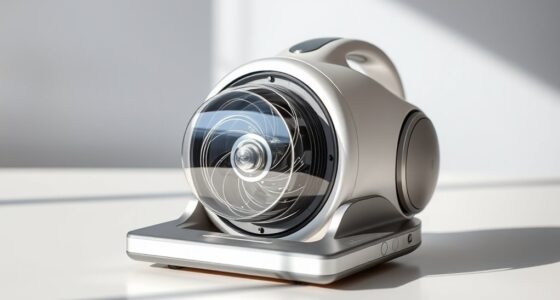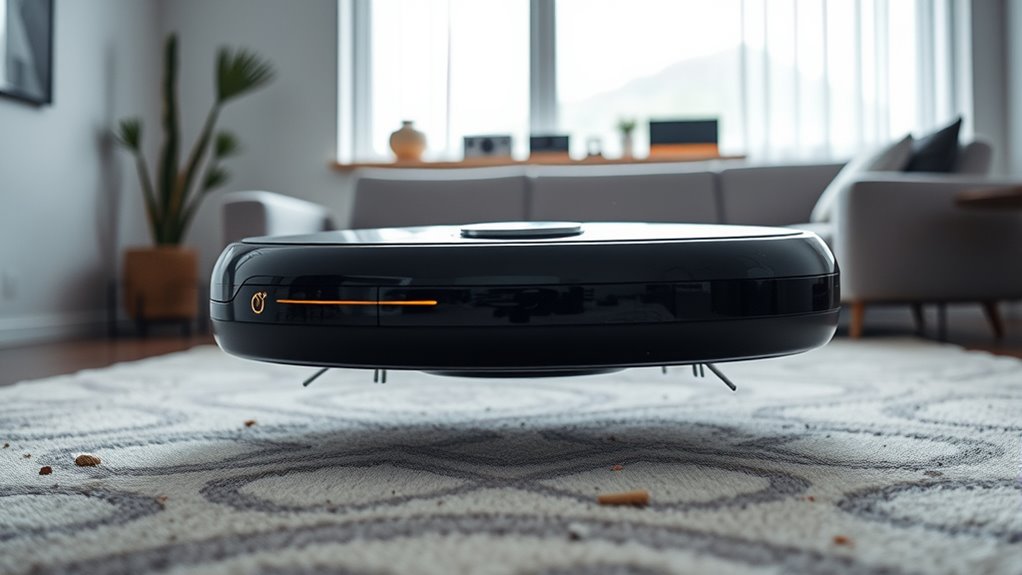

AI-powered vacuums offer advanced navigation using technologies like LiDAR, enabling precise mapping and obstacle avoidance, which improves cleaning efficiency. However, many features marketed as smart or AI-driven may be exaggerated, and real effectiveness depends on the quality of the core navigation and battery systems. Cheaper models have shorter run times, while premium ones last longer and cover larger areas. To avoid marketing hype, understanding these core features will help you choose the right device—more details await if you continue exploring.
Key Takeaways
- Advanced AI and LiDAR enable precise navigation, distinguishing genuine tech from marketing claims.
- Better navigation systems lead to more efficient cleaning, not just higher prices or marketing hype.
- Battery life varies widely; longer durations improve usability, but marketing often overstates actual runtime.
- Smart features like app control depend on core navigation and power systems, not just marketing promises.
- Researching the technology behind vacuums ensures choosing models with effective AI navigation rather than marketing fluff.
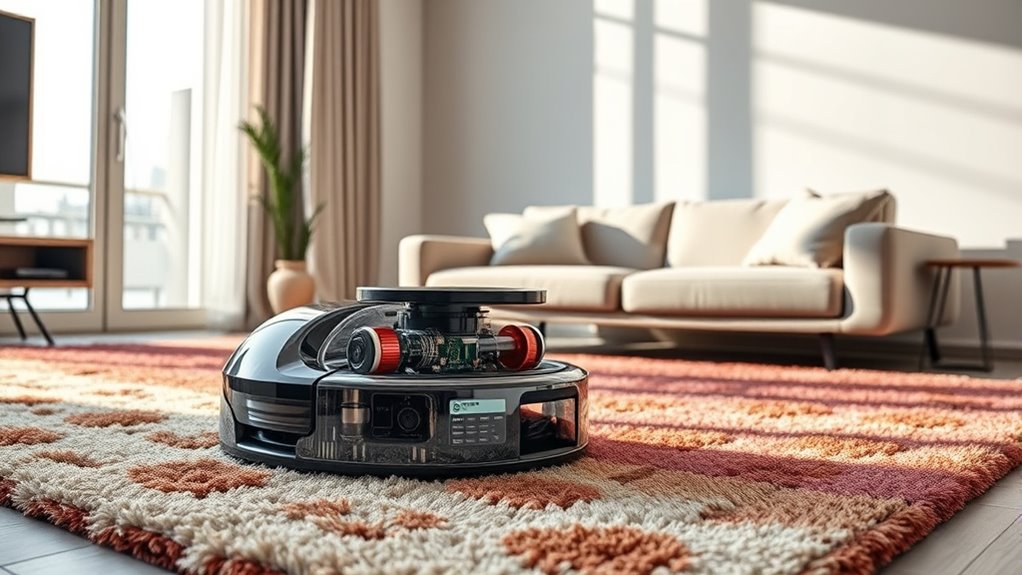
Ai-powered vacuums are transforming the way you clean your home by using advanced artificial intelligence to navigate efficiently and adapt to different environments. These devices are equipped with sophisticated robotic navigation systems that enable them to map out your space, avoid obstacles, and cover every inch of your floors. Unlike traditional vacuums, which require manual operation and guidance, AI vacuums intelligently plan their routes, ensuring thorough cleaning without your constant supervision. This robotic navigation is a major selling point, but it’s important to understand that not all systems are created equal. Some use simple sensors to detect obstacles, while others employ more advanced mapping technologies like LiDAR, which create detailed floor plans. The more precise the navigation system, the more efficient and effective the cleaning process becomes.
However, as you evaluate these vacuums, consider their battery life, which directly impacts their usability. Most AI-powered vacuums are designed to return to their charging stations automatically when the battery runs low, then resume cleaning once recharged. But, the duration of their battery life varies considerably across models. Cheaper options might last only 20-30 minutes per charge, making them suitable for small spaces or quick cleanups. Premium models often boast 90 minutes or more of runtime, allowing them to cover larger areas in a single session. Longer battery life means less interruption and fewer recharges, but it also typically comes with a higher price tag. When shopping, think about the size of your home or the areas you want to clean and choose a model with a battery life that fits your needs.
While robotic navigation and battery life are often highlighted features, they are just part of what makes an AI vacuum a worthwhile investment. Many models also incorporate smart features like app control, voice commands, and automatic dirt detection, but these depend on the quality of their core navigation and power systems. Keep in mind that marketing claims can sometimes exaggerate these features, so it’s wise to check real user reviews and independent testing results. Additionally, understanding the technology behind the navigation systems can help you select a model that truly meets your cleaning needs. Ultimately, an AI-powered vacuum that combines intelligent navigation with a robust battery life can save you time, reduce effort, and keep your home cleaner, but matching the right model to your specific needs requires careful research beyond just marketing hype.
Frequently Asked Questions
How Long Do Ai-Powered Vacuum Batteries Typically Last?
You might wonder how long AI-powered vacuum batteries last. Typically, their battery lifespan ranges between 2 to 4 years, depending on usage and charging cycles. Most models can handle around 300 to 500 charging cycles before performance declines. To prolong battery life, avoid frequent full discharges and follow proper charging habits. Regular maintenance helps ensure your vacuum operates efficiently throughout its useful life.
Are AI Vacuums Safe for Pets and Children?
You’re probably wondering if AI vacuums are safe for pets and children. Generally, they are, but it’s wise to take into account pet safety and allergy concerns. Look for models with sensors to avoid bumping into pets and children, and choose vacuums with hypoallergenic filters to reduce allergens. Always supervise your kids and pets around new devices, and follow manufacturer guidelines to ensure a safe, clean environment.
Do AI Vacuums Require Internet Connectivity to Function?
Think of your AI vacuum like a ship steering with a steady map; it doesn’t always need to stay connected. Many models depend on internet for cloud connectivity, but some work offline. While internet dependency allows for updates and smarter cleaning, others operate fully without it. Check your vacuum’s specs—if it relies on cloud connectivity, a stable internet connection is essential for best performance.
Can AI Vacuums Detect and Avoid Delicate Surfaces?
AI vacuums can detect and avoid delicate surfaces thanks to surface sensitivity features. These vacuums use sensors to identify fragile areas like wooden or carpeted floors, adjusting their cleaning methods accordingly. With delicate surface detection, you won’t have to worry about scratching or damaging your flooring. Surface sensitivity allows the vacuum to navigate carefully around delicate spots, ensuring thorough cleaning without risking harm to your surfaces.
What Maintenance Is Needed for Ai-Powered Vacuum Systems?
Ever wonder how your AI-powered vacuum keeps performing at its best? You’ll need to do some simple maintenance, like replacing filters regularly and keeping the software updated. These steps guarantee peak cleaning and prevent issues. Do you really want your smart device to work efficiently? Staying on top of filter replacement and installing updates maintains the system’s intelligence and longevity, so you get the most out of your investment every time.
Conclusion
So, as you navigate the world of AI-powered vacuums, remember they’re like clever little assistants—smart but not magic. Don’t let flashy marketing sweep you off your feet; dig deeper into their true capabilities. Think of them as loyal sidekicks, ready to tackle messes but not replace the human touch. With a discerning eye, you’ll find the perfect balance between innovation and reality, turning cleaning into a breeze rather than a battle.