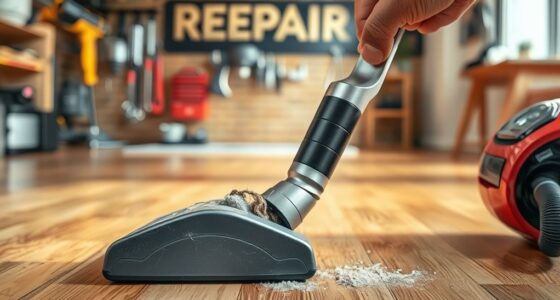
Lubricating your vacuum motors and parts is vital for keeping your vacuum running smoothly and extending its lifespan. Unplug the vacuum and check the user manual for recommended lightweight oils. Apply a few drops to bearings and moving parts, but don’t overdo it to avoid attracting dust. After lubrication, spin the motor parts to distribute the oil evenly. If you notice any strange noises, reassess the lubrication process. You’ll find more tips for maintenance as you explore further.
Key Takeaways
- Regularly lubricate vacuum motors to extend their lifespan and improve performance by reducing wear on moving parts.
- Use lightweight oils or specific motor lubricants, avoiding heavy oils that attract dust.
- Always unplug the vacuum before lubrication and locate the necessary components, like bearings and fans.
- Apply a few drops of lubricant to moving parts, ensuring even distribution by spinning them by hand.
- After lubrication, reassemble the vacuum, check for proper fit, and listen for unusual noises during operation.

When you maintain your vacuum cleaner, one essential step often overlooked is lubricating the motor and its parts. You might not think about it, but proper lubrication can extend the life of your vacuum and improve its performance. Regular maintenance schedules should ideally include this important task, ensuring that your vacuum runs smoothly and efficiently.
First, you need to identify the right lubricant types for your vacuum. Generally, most motor components require a lightweight oil or a specific lubricant designed for electric motors. Check your vacuum’s user manual for recommendations, as using the wrong type can damage the motor or cause it to malfunction. If you don’t have the manual, look for oils like 3-in-1 or silicone-based lubricants, which are commonly safe for electric motors. Avoid using heavy oils or greases; they can cause more harm than good by attracting dust and debris.
Identify the right lubricant for your vacuum to ensure optimal performance and prevent potential damage.
Before you start lubricating, unplug your vacuum cleaner to guarantee your safety. Once you’ve done that, locate the motor and the moving parts that need attention. These typically include bearings, fans, and axles. A good practice is to establish a routine based on your maintenance schedules. For example, if you use your vacuum daily, consider lubricating it every month. If it’s used less frequently, every three to six months may suffice.
To apply the lubricant, use a small dropper or a spray can, ensuring you don’t overdo it. A little goes a long way. Apply a few drops to the bearings and any moving parts, allowing it to seep in. After you’ve lubricated everything needed, give the motor a few spins by hand to distribute the lubricant evenly.
After lubricating, reassemble your vacuum and plug it back in. Turn it on and listen for any unusual noises. A well-lubricated motor should run quietly and smoothly. If you hear any grinding sounds, you might need to reassess the lubrication or check for other issues. Additionally, just like airless paint sprayers, proper maintenance through lubrication can significantly enhance the performance and longevity of your vacuum.
Frequently Asked Questions
How Often Should Vacuum Motors Be Lubricated?
You should follow a maintenance schedule that includes lubricating your vacuum motors every three to six months, depending on usage. If you use your vacuum frequently, aim for the shorter interval. Regular lubrication helps prevent wear and tear, ensuring peak performance. Remember, sticking to this lubrication frequency not only extends the life of your vacuum motor but also maintains its efficiency, so don’t skip this vital part of your routine!
What Type of Lubricant Is Best for Vacuum Motors?
For vacuum motors, a lightweight, non-toxic lubricant is your best bet. Think of it as a gentle embrace, ensuring smooth operation without harming the environment. You’ll want to contemplate lubricant compatibility with your motor’s materials, as some oils can cause wear or damage. Opt for biodegradable options when possible to minimize environmental impact. By choosing wisely, you’ll keep your motor humming happily while being kind to Mother Earth.
Can I Use Oil Instead of Grease for Lubrication?
You can use oil instead of grease for lubrication, but it depends on the application. Oil alternatives might work well for certain components that require fluid movement, while grease is better for long-lasting protection and stability. If you choose oil, make sure it’s compatible with your equipment. Generally, both lubrication methods have their advantages, so evaluate your specific needs before deciding which one to use for maximum performance.
Are There Specific Lubricants for Different Vacuum Motor Brands?
Yes, there are specific lubricants tailored for different vacuum motor brands. In fact, about 70% of vacuum motor failures can be traced back to improper lubrication. You need to guarantee lubricant compatibility with your vacuum motor to maintain peak performance and lifespan. Always check the manufacturer’s recommendations to avoid issues that could cost you down the line. The right lubricant can make all the difference in keeping your vacuum running smoothly.
What Are the Signs of a Vacuum Motor Needing Lubrication?
If your vacuum motor’s overheating or making unusual noises, it’s time to check for lubrication. You might notice a decrease in suction power or the motor struggling to function properly. These signs indicate friction within the motor components, often due to insufficient lubrication. Ignoring these symptoms can lead to more significant damage, so pay attention and act promptly to keep your vacuum running smoothly and efficiently.
Conclusion
In the world of vacuum motors, lubrication’s your secret ingredient, like the oil that keeps a well-tuned engine purring. Don’t let friction dim the shine of your machine’s performance; instead, embrace a routine of care that’ll keep those parts dancing in harmony. With each drop of lubricant, you’re not just maintaining a tool; you’re nurturing a trusted partner in cleanliness. So, keep that motor humming, and watch your space sparkle like stars in the night sky.