Aligning your floor heads is essential for peak cleaning performance. Start by inspecting for any visible damage or wear, and check if the brushes are properly positioned. Adjust them to guarantee they’re flush against the cleaning surface for maximum contact. After that, calibrate tool settings based on the types of surfaces you’re working on. This process not only enhances efficiency but also prevents uneven results. There’s more to discover about maintenance and calibration techniques to keep everything running smoothly.
Key Takeaways
- Conduct an initial inspection for any visible damage or wear on the floor head and brushes before making adjustments.
- Adjust brushes to ensure they are evenly aligned and sit flush against the cleaning surface for maximum effectiveness.
- Refer to manufacturer guidelines to calibrate settings like brush speed, pressure, and suction based on the type of surface being cleaned.
- Regularly inspect and maintain floor heads to ensure optimal cleaning results and prevent uneven wear on brushes.
- After adjustments, test performance on a small area and tweak settings as needed for peak cleaning efficiency.
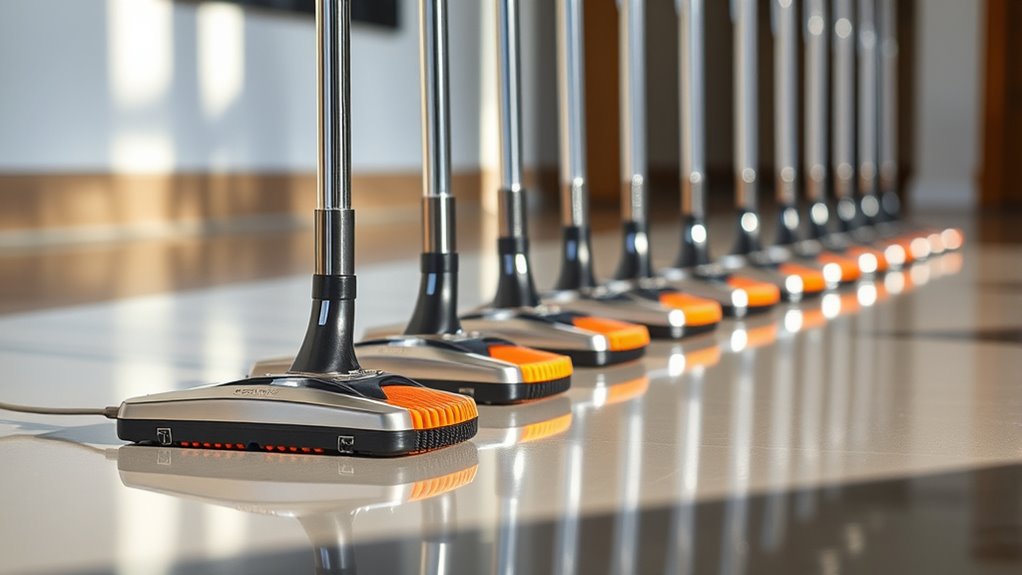
When you’re aligning floor heads, it’s essential to make certain they’re positioned correctly for peak performance. Proper alignment ensures that your cleaning equipment operates efficiently, maximizing its effectiveness on various surfaces. You’ll want to start by checking the brush alignment. If the brushes aren’t properly aligned, they won’t make full contact with the floor, leading to uneven cleaning results. This can cause frustration and extra work, wasting both your time and resources.
Proper alignment of floor heads is crucial for optimal cleaning performance and efficiency on all surfaces.
To begin the alignment process, first, inspect the floor head for any visible damage or wear. Look for bent or broken brushes that can hinder performance. If everything seems intact, you can proceed with adjusting the brushes. Most floor heads have a mechanism that allows for easy adjustment. You’ll want to loosen the adjustment screws and gently reposition the brushes until they sit evenly against the cleaning surface. Once you’ve got them in place, tighten the screws to secure the alignment.
Next, it’s imperative to think about tool calibration. This step is often overlooked but is just as vital for peak performance. Calibration ensures that the cleaning machine operates at the correct settings, which directly influences its cleaning efficiency. Start by reviewing the manufacturer’s guidelines for your specific equipment. They often provide valuable information on the recommended settings for different types of surfaces.
During the calibration process, pay close attention to the brush speed, pressure, and suction settings. Adjust these parameters based on the type of floor you’ll be cleaning. For instance, hard surfaces may require different settings compared to carpeted areas. Once you’ve made the adjustments, test the machine on a small area to see how it performs. If you notice any issues, revisit the calibration settings and make further tweaks as necessary. Additionally, remember that proper brush alignment is crucial for maintaining optimal cleaning results.

Upgraded Vacuum Floor Brush for Universal Vacuum Cleaners with 1 ¼ inch (1.25'') (32mm) Inner Diameter with Horse Hair Soft Bristles 10” Wide Black (1 Brush Only)
Universal Fit – 1.25” (32mm) Inner Diameter: Compatible with most standard vacuum cleaners, this floor brush attaches easily…
As an affiliate, we earn on qualifying purchases.
As an affiliate, we earn on qualifying purchases.
Frequently Asked Questions
What Tools Are Needed to Align Floor Heads Effectively?
To align floor heads effectively, you’ll need a few essential tools. Start with attachment tools like screwdrivers and wrenches to adjust the heads properly. You’ll also want a level to ensure everything’s aligned accurately. Familiarize yourself with alignment techniques, such as measuring from a reference point and checking for uniform gaps. By using these tools and techniques, you can guarantee your floor heads are positioned for peak performance during cleaning sessions.
How Often Should Floor Heads Be Realigned?
You should realign floor heads every few months as part of your maintenance schedule. Regular checks help guarantee peak performance and prevent uneven wear. Use alignment techniques like measuring distances from the floor to the heads and adjusting accordingly. If you notice any irregular cleaning patterns or hear unusual noises, it’s a good idea to realign them sooner. Keeping a consistent schedule will enhance your cleaning efficiency and extend the lifespan of your equipment.
Can Misaligned Floor Heads Damage My Cleaning Equipment?
Yes, misaligned floor heads can definitely damage your cleaning equipment. Imagine you’re using a vacuum with a misaligned head; it struggles to pick up dirt, leading to debris buildup that clogs filters. This can strain the motor, causing expensive repairs. Regular headgear maintenance is essential to prevent such issues. By ensuring your floor heads are properly aligned, you’ll maintain peak performance and extend the life of your cleaning equipment.
What Types of Floors Benefit Most From Properly Aligned Floor Heads?
Properly aligned floor heads benefit carpeted and hardwood floors the most. When you guarantee alignment, you preserve carpets by preventing uneven wear and tear, keeping them looking fresh longer. On hardwood floors, alignment helps avoid scratches and dents, maintaining their beauty and safety. By focusing on these surfaces, you can enhance your cleaning efficiency, extend the life of your flooring, and enjoy a cleaner, healthier home environment without unnecessary damage.
Are There Any Safety Concerns When Aligning Floor Heads?
Yes, there are safety concerns when aligning floor heads. You should always take safety precautions to avoid accidents. Make certain the area is free from obstacles and wet surfaces to prevent slips. Maintain hazard awareness by checking your equipment regularly for wear and tear, which can lead to malfunction. Additionally, be cautious of electrical cords and ensure they’re out of the way while you work. Prioritizing safety keeps you and others safe during the process.
Upgraded Vacuum Floor Brush for Universal Vacuum Cleaners with 1 ¼ inch (1.25'') (32mm) Inner Diameter with Horse Hair Soft Bristles 10” Wide Black (1 Brush Only)
Universal Fit – 1.25” (32mm) Inner Diameter: Compatible with most standard vacuum cleaners, this floor brush attaches easily…
As an affiliate, we earn on qualifying purchases.
As an affiliate, we earn on qualifying purchases.
Conclusion
By aligning floor heads properly, you can substantially enhance your cleaning efficiency and reach those tricky corners with ease. You might worry that this process seems tedious, but taking a few moments to adjust the heads saves you time in the long run. Investing just a bit of effort now means less time spent re-cleaning areas later. So, give it a shot—your floors will thank you, and you’ll enjoy a cleaner, more polished space in no time!

Schneider Industries Micro Vacuum Attachment 7 Piece Kit
Miniature Vacuum Kit
As an affiliate, we earn on qualifying purchases.
As an affiliate, we earn on qualifying purchases.

SQUEEEK NO MORE Squeaky Floor Repair Kit for Hardwood, Carpet, Vinyl & Linoleum – Complete Floor Squeak Repair Kit Includes Joist Finder Drill Bits, Tripod Fixture and 50 Counter-snap Screws
Eliminate Squeaky Floors for Good – A trusted US brand since 1993, The SQUEEEK NO MORE squeaky floor…
As an affiliate, we earn on qualifying purchases.
As an affiliate, we earn on qualifying purchases.