
TL;DR

Get cleaning gear delivered free with Prime
- Fast, free delivery on millions of items
- Prime Video, Amazon Music and more included
- Member-only deals all year
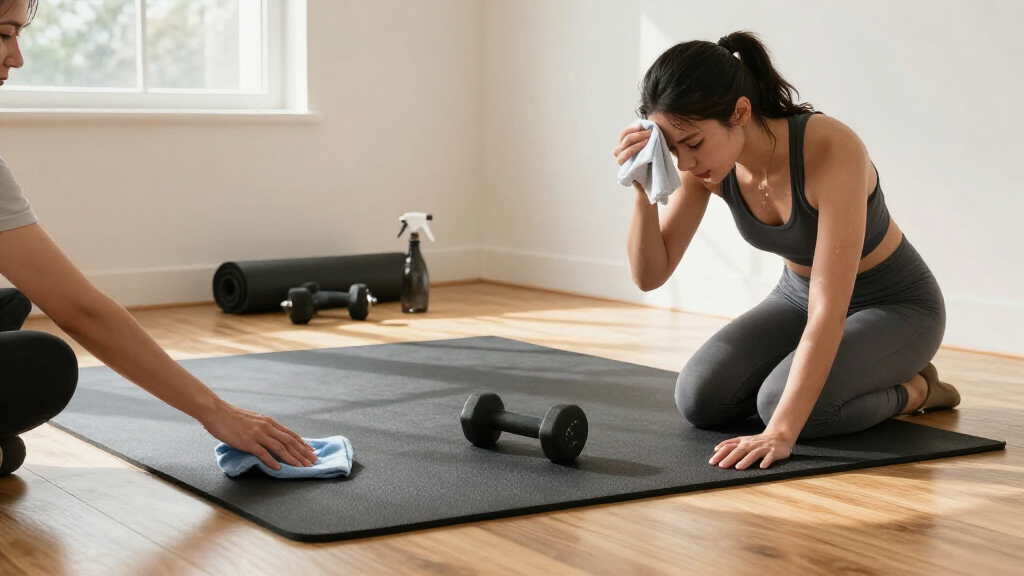
Interior designers interviewed by Livingetc say home gyms remain in demand, particularly in luxury residential projects, even as group fitness becomes a social activity. They describe a shift from equipment-only rooms toward designed spaces that may combine exercise with recovery and relaxation.
Home gyms remain part of the brief for many luxury homes, but designers say they are being planned less as equipment rooms and more as integrated wellness spaces. The shift comes as group workouts and fitness clubs increasingly serve as social venues, prompting questions about whether exercise at home still has a place in people’s routines.
In a report on the evolution of home gyms, Livingetc spoke with interior designers and fitness-equipment specialists about how these spaces are changing. The designers described continued demand in high-end residential projects, while stressing that the expectations for a home gym have broadened. Their comments concern design practice and client briefs; the report does not provide market-wide sales figures or survey data.
“Home gyms remain an important part of the luxury residential brief in modern homes,” Sydney-based interior designer Nina Maya told Livingetc. She said clients increasingly consider a gym early in the design process, with attention to its location, outlook and connection to nearby rooms. In one project, she said, the gym looks out toward a pool and garden through large windows.
British designer Rebecca Hughes also told the publication that demand remains strong, while the space’s purpose has expanded beyond exercise. Alama Studio co-founder Gabriele Zanni said clients want gyms to feel like part of the home rather than a separate room dominated by equipment. The examples and observations are attributed to the designers; Livingetc did not report independent figures showing how widely the trend applies.
Fitness Meets Everyday Home Design
The changing brief matters to homeowners because a gym can take up valuable floor space and affect decisions about layout, lighting, storage and materials. If the room is planned as part of a broader wellness area, it may also need to connect with spaces for stretching, bathing or recovery. Those choices are different from simply finding a corner for a treadmill and weights.
The social appeal of exercise outside the home does not, by itself, establish that home workouts are losing demand. The designers quoted by Livingetc describe a continuing market for home gyms among their residential clients, but their accounts do not show how households overall divide exercise between home and studios. The report’s central takeaway is narrower: in some high-end projects, designers say the home gym is being treated as a lifestyle space, not just a functional amenity.
That approach also links the room to the home’s overall look. Maya described natural light, garden views, warm finishes and integrated storage as elements that can make a workout space more comfortable to use. Equipment with timber or leather details may be selected to sit more naturally alongside other interiors, according to the report.
Products Worth Considering

eufy C28 Robot Vacuum and Mop with HydroJet Roller and 15,000 Pa Suction

eufy E25 Robot Vacuum and Mop for Pet Hair, 20,000 Pa, HydroJet Roller Mop

Levoit Core 400S-P Smart Air Purifier for Large Rooms
As an affiliate, we earn on qualifying purchases.
From Equipment Room to Wellness Hub
The report frames the design shift against the growing visibility of social fitness activities, including run clubs, Pilates gatherings and group sauna sessions. These activities can combine exercise with time among friends, while home gyms offer convenience and privacy. The source raises the tension between the two but does not establish that one is replacing the other.
Livingetc’s designers describe a move toward planning exercise areas alongside other wellness features. Maya said a gym might sit near a sauna, steam room or cold plunge, with space for stretching and quieter activities. In a separate example, Hughes described a bespoke gym in a historic home that paired contemporary equipment with the building’s original timber beams. These are project examples, not evidence that every home gym is evolving in the same way.
Zanni’s description captures the design aim: “It is becoming less about ‘having a gym at home’ and more about ‘having a space at home that happens to be a gym.’” His comment reflects the studio’s experience in residential projects, rather than a quantified industry forecast.
““We’re certainly still seeing strong demand for home gyms, although the focus has evolved over the past few years.””
— Rebecca Hughes, interior designer, speaking to Livingetc
How Broad Is the Demand?
The report does not quantify the number of homes being built with gyms, changes in equipment purchases, or demand among homeowners outside the luxury market. It also does not compare home workout use with attendance at studios, clubs or group events. The designers’ comments describe what they see in their own work and client briefs, not a representative industry survey.
Livingetc refers to what home gyms may look like in 2027, but the source presents designer observations rather than a formal forecast with dates, data or market projections. It remains unclear how many homeowners will choose a dedicated gym, how much space they will assign to it, or which wellness features will become common beyond high-end projects.
Design Choices to Watch
The report points to continued attention to how exercise rooms connect with the rest of a home: their placement, natural light, views, materials, storage and links to recovery areas. For homeowners considering a gym, the practical next step is to decide whether the space must serve only workouts or also support stretching and relaxation, then plan its layout and equipment around those uses.
Livingetc offers no forthcoming data release or industry milestone to confirm the scale of the shift. A clearer picture would require broader evidence, such as housing-project specifications, equipment sales or surveys of how people use home and commercial fitness spaces. Until then, the available development is the designers’ reported experience: demand persists in the projects they work on, while the design brief is expanding.
Key Questions
Are home gyms still in demand?
Designers interviewed by Livingetc say they continue to see demand, especially in luxury residential projects. The report does not include market-wide figures, so it cannot show how common home gyms are across all households.
How are home gyms changing?
The designers describe a move away from equipment-only rooms toward spaces planned as part of the home’s wider design. Some briefs include stretching and recovery areas or connections to features such as saunas and steam rooms.
The source does not show that social fitness is replacing home workouts. It describes the rise of group activities as a social outlet and reports that designers still see home-gym demand among their clients.
What design features are being considered?
Designers cited natural light, outdoor views, warm materials, integrated storage and equipment that fits the interior. The choices depend on each project; the report does not suggest one standard design for every home gym.
Source: livingetc.com