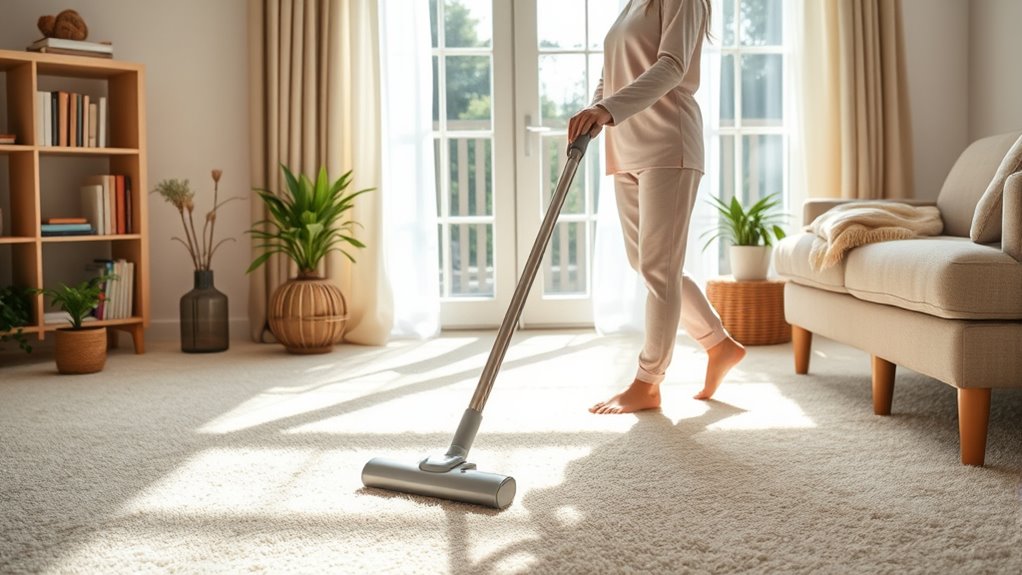

Vacuuming can be a mindful self-care activity that helps reduce stress and boost your mental and physical well-being. By focusing on sensory details like sound and touch, you can stay present and clear your mind of worries. Moving intentionally also engages your body, promoting relaxation and physical health. Turning cleaning into a calming ritual makes chores more fulfilling. Keep exploring how mindful cleaning can transform your self-care routine and support your overall wellness.
Key Takeaways
- Mindful vacuuming promotes presence and reduces stress by focusing on sensory experiences like sound and touch.
- Turning cleaning into a self-care ritual helps calm the mind and supports emotional well-being.
- Engaging in controlled movements during vacuuming enhances body awareness and relaxes tense muscles.
- Combining physical activity with mindfulness makes routine chores a gentle form of exercise that benefits mental health.
- Incorporating mindfulness into cleaning routines fosters relaxation, reduces anxiety, and nurtures overall self-care.
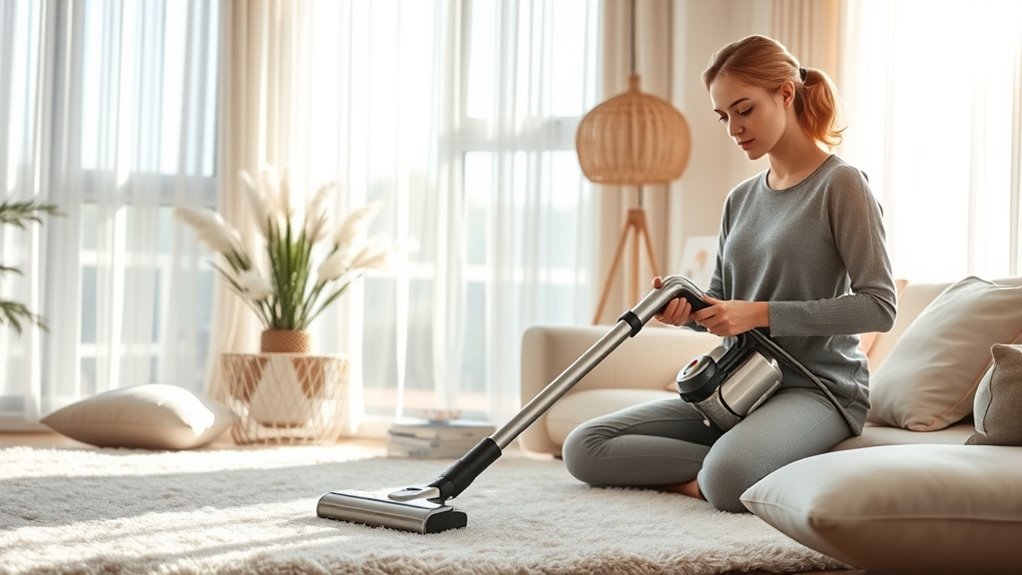
Have you ever considered that vacuuming can be more than just a chore? It’s easy to see cleaning as a tedious task, but if you approach it intentionally, it can become a form of mindfulness practice that benefits your mental health. When you focus fully on the act of vacuuming—the sound of the motor, the feel of the handle in your hands, the rhythm of your movements—you create an opportunity to be present. This focused attention helps clear your mind of worries and stress, much like meditation. By turning vacuuming into a mindful activity, you’re not just tidying up your space; you’re also giving yourself a mental reset.
Transform vacuuming into a mindfulness practice to clear your mind and promote mental well-being.
Incorporating mindfulness into your cleaning routine can make the process feel less like a chore and more like a self-care ritual. As you move the vacuum across the floor, pay close attention to your breathing, the sensations in your muscles, and your surroundings. This kind of awareness can reduce anxiety and promote a sense of calm. It’s similar to physical therapy exercises, which often emphasize controlled movements and mindful awareness of your body. Just as physical therapy encourages you to connect with your muscles and improve your posture, focusing on your body during vacuuming can enhance your physical and mental well-being. You might notice areas of tension and consciously relax those muscles, turning a simple chore into a gentle, therapeutic activity.
Beyond the mental benefits, vacuuming can also serve as a form of gentle physical therapy. The act of pushing and pulling the vacuum engages your core, arms, and legs, helping to improve your strength and flexibility over time. It’s a low-impact way to stay active, especially if you find traditional workouts overwhelming or difficult. When you approach vacuuming with intention, you’re not just cleaning; you’re giving your body a subtle workout that supports your overall health. This perspective can make the task feel more worthwhile and less burdensome, transforming it from an obligation into a moment of self-care.
Additionally, mindfulness practice can be effortlessly integrated into daily chores like vacuuming, making it easier to incorporate mental health benefits into your routine. Ultimately, by merging mindfulness practice with physical therapy principles during vacuuming, you create a holistic approach to self-care. It’s about being present, respecting your body’s signals, and nurturing your mental health—all while maintaining a clean living space. When you view vacuuming through this lens, you’re actively caring for your mind and body, turning an everyday chore into a powerful tool for reducing stress and fostering wellbeing.
Frequently Asked Questions
Can Vacuuming Improve Mental Health Long-Term?
Yes, vacuuming can improve your long-term mental health. It acts as a mindfulness practice, helping you stay present and focused on the task. The sensory stimulation from the noise, movement, and textures can reduce feelings of anxiety and overwhelm. Regularly engaging in this simple activity can boost your mood, create a sense of accomplishment, and contribute to overall emotional well-being over time.
How Often Should I Vacuum for Stress Relief?
You should vacuum at least once a week to maintain effective cleaning routines and promote stress relief. Regular vacuum maintenance keeps your machine functioning well, making the process more satisfying and less frustrating. If you find cleaning calming, consider vacuuming two or three times weekly. Adjust frequency based on your space and stress levels. Consistent routines help create a calming environment, making your cleaning sessions a relaxing, stress-reducing activity.
Does Vacuuming Help With Anxiety?
Vacuuming can definitely help with anxiety; did you know that engaging in sensory activities like cleaning can boost your mood? By focusing on the sound and feel of the vacuum, you practice mindfulness, which reduces stress. When you immerse yourself in this activity, it shifts your attention away from worries, helping you feel calmer. Using vacuuming as a mindful practice creates a soothing routine that eases anxiety effectively.
What Type of Vacuum Cleaner Is Best for Self-Care?
The best vacuum for self-care features an ergonomic design and noise reduction. Look for a lightweight model with an adjustable handle to minimize strain, making your cleaning sessions more comfortable. Noise reduction is essential, so choose a quieter vacuum to create a calming environment and avoid stress. This way, vacuuming becomes a soothing activity that helps you relax and feel accomplished without adding physical or mental burdens.
Are There Specific Vacuuming Techniques That Enhance Relaxation?
Yes, you can enhance relaxation by practicing mindful movement while vacuuming. Focus on your breath, slow down your pace, and pay attention to each stroke. Listen to calming sounds of the vacuum to create a soothing atmosphere. This mindful approach helps clear your mind, reduces stress, and transforms vacuuming into a calming self-care ritual. Make it a moment to connect with yourself and enjoy the present.
Conclusion
So, next time you’re feeling overwhelmed, grab your vacuum and start cleaning. It’s not just about a tidy space—vacuuming can boost your mood and reduce stress. Did you know studies show that engaging in household chores can lower cortisol levels, the stress hormone, by up to 25%? Turning cleaning into a self-care ritual helps you relax and reclaim your calm. Embrace the power of a simple vacuum to support your mental well-being every day.