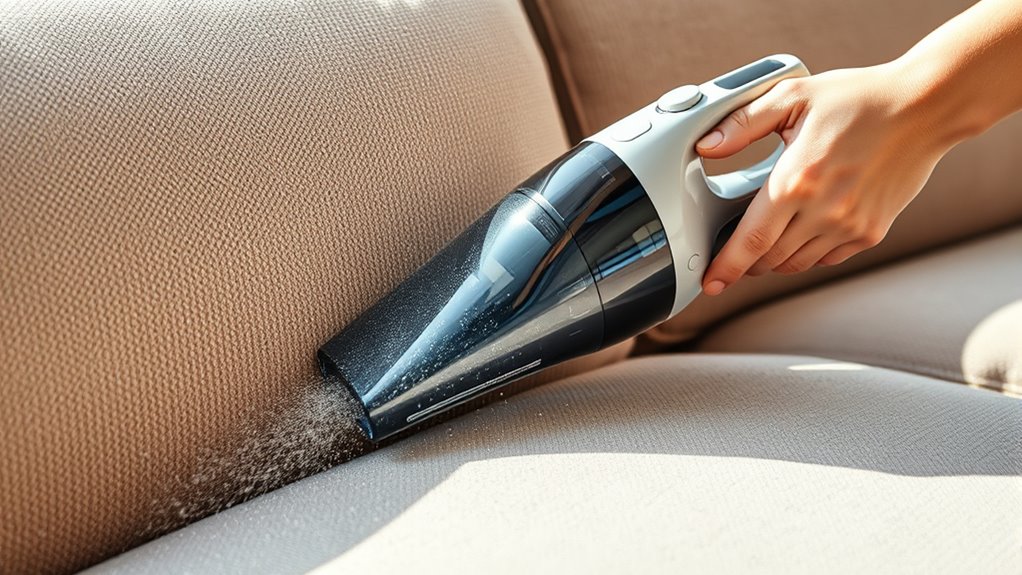

To eliminate dust and pet dander from upholstery, use a vacuum cleaner equipped with HEPA filters and upholstery attachments. Vacuum slowly in overlapping strokes, focusing on seams, crevices, and high-traffic areas, and regularly empty the canister. Remove pet hair with lint rollers or rubber gloves before vacuuming, and consider dampening microfiber cloths to lift stubborn dander. Maintaining a routine with these techniques helps create a healthier, allergen-free space—keep exploring to learn more effective tips.
Key Takeaways
- Use vacuum cleaners with HEPA filters and upholstery attachments to effectively trap dust and pet dander from fabric surfaces.
- Vacuum upholstery thoroughly at least once a week, focusing on seams, crevices, and high-traffic areas.
- Remove pet hair with lint rollers, rubber gloves, or damp microfiber cloths before vacuuming for better results.
- Regularly groom pets to reduce shedding and minimize the amount of dander that settles on furniture.
- Maintain a consistent cleaning schedule and incorporate additional tools like fabric brushes for deep cleaning.

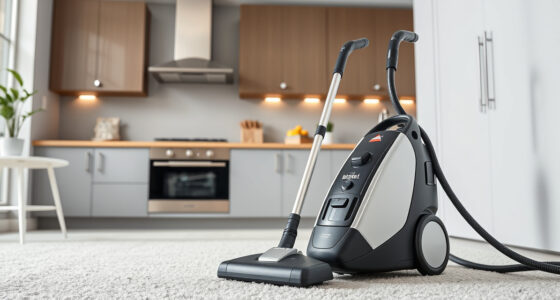
Dust and pet dander often settle deeply into upholstery, making it a common source of allergies and respiratory irritation. To combat this, you need effective vacuum techniques that target these tiny particles. Start by choosing a vacuum cleaner with a HEPA filter—this guarantees that the dust and pet dander don’t just get shoved around but are actually captured and removed from your furniture. Use the upholstery attachment, which is designed to reach into fabric fibers and loosen debris. Work in slow, overlapping strokes to ensure thorough cleaning, paying special attention to seams, cushions, and crevices where pet hair and dander tend to hide. Regularly empty the vacuum canister or replace the bag to maintain suction power, because a clogged filter won’t do its job effectively. For heavily soiled areas or stubborn pet hair, you can use a brush attachment to loosen hair before vacuuming. Also, consider vacuuming your upholstery at least once a week to prevent the buildup of allergens.
Pet hair removal is a vital part of maintaining clean upholstery, especially if you have furry friends. It’s best to tackle pet hair when it’s still loose—so don’t wait until it’s embedded deeply. Before vacuuming, use a lint roller or rubber gloves to pick up loose pet hair from cushions and upholstered surfaces. The rubber gloves create static that helps lift hair from fabric fibers, making vacuuming more effective. For persistent pet hair, dampen a microfiber cloth and gently wipe the surface; the moisture helps lift hair and dander, making it easier for your vacuum to pick up everything in subsequent passes. When vacuuming, focus on areas with the most pet activity, like the arms of sofas or around pet beds. Regular grooming of your pets also reduces the amount of hair and dander they shed onto your furniture, lessening the workload for your cleaning routine.
In addition to vacuuming, consider using specialized pet hair removers or fabric brushes designed for upholstery. These tools can be more efficient at lifting hair from stubborn fabrics, especially on textured or plush surfaces. Combining these techniques with routine vacuuming and pet grooming creates a complete approach to eliminating dust and pet dander, improving indoor air quality and making your living space healthier for everyone. Remember, regular cleaning routines are essential for maintaining a dust-free environment. By establishing a regular cleaning schedule and using the right tools, you’ll keep your upholstery cleaner, fresher, and more allergen-free.
HEPA filter upholstery vacuum cleaner
As an affiliate, we earn on qualifying purchases.
As an affiliate, we earn on qualifying purchases.
Frequently Asked Questions
Can Specific Fabrics Trap More Dust and Pet Dander?
Yes, some fabrics trap more dust and pet dander due to their porosity. Fabrics with high porosity tend to retain allergens more easily because they allow particles to settle deep within the fibers. You should choose tightly woven, low-porosity fabrics like leather or microfiber, which resist allergen retention better. Regular cleaning and vacuuming help reduce dust and pet dander buildup, making your upholstery healthier and more comfortable.
Are There Natural Remedies to Reduce Allergens on Upholstery?
Yes, you can try DIY cleaning methods and natural allergen remedies to reduce allergens on upholstery. Regularly vacuum with a HEPA filter, sprinkle baking soda, and let it sit before vacuuming again. Use a mixture of equal parts vinegar and water for spot cleaning, or apply a few drops of essential oils like eucalyptus or lavender. These natural options help neutralize dust and pet dander without harsh chemicals.
How Often Should Upholstery Be Professionally Cleaned?
You should schedule professional upholstery cleaning every 12 to 18 months to maintain your furniture’s condition. Regular upholstery maintenance helps keep dust, pet dander, and allergens at bay. Adhering to consistent cleaning schedules guarantees your upholstery stays fresh, clean, and allergen-free. If you have pets or allergies, consider cleaning more often, around once a year, to effectively reduce dust and pet dander buildup and prolong the life of your furniture.
Do Air Purifiers Help With Dust and Pet Dander?
Imagine you’re allergy-prone and use an air purifier in your living room. It effectively captures dust and pet dander, thanks to its high allergen filtration techniques. Air purifier efficiency varies, but models with HEPA filters markedly reduce airborne allergens. By continuously filtering the air, they help create a healthier environment, especially when combined with regular cleaning of upholstery. So, yes, air purifiers do help with dust and pet dander.
What Are the Best Protective Covers for Furniture?
You should consider slipcovers and fabric barriers as top protective covers for your furniture. Slipcovers provide easy protection and can be removed for cleaning, keeping dust and pet dander at bay. Fabric barriers, like specially treated throws or covers, create a protective layer that repels allergens and fur. Both options help maintain your furniture’s cleanliness and are practical choices to shield against dust, pet hair, and dirt.
Conclusion
Now that you know how to eliminate dust and pet dander from your upholstery, imagine the freshness waiting just beneath the surface. But remember, regular cleaning isn’t enough—those tiny particles can hide in the most unexpected places. Stay vigilant, and your home will stay healthier longer. The real question is, are you ready to uncover what’s been lingering all along? The next cleaning session might reveal surprises you never saw coming.