
To effectively remove pet hair from upholstery with a vacuum, start by using a vacuum with the right attachments, like a pet hair brush nozzle. Pre-clean with a lint roller or rubber glove to lift loose hair. When vacuuming, work from the top down using slow, steady strokes for better results. Don’t forget to maintain your vacuum by checking filters and bags regularly. Want to discover more tips for keeping your upholstery pet hair-free?
Key Takeaways
- Choose a vacuum with specialized pet hair attachments for effective removal from upholstery.
- Prepare upholstery by using a lint roller or rubber glove to lift loose hair before vacuuming.
- Employ the pet hair attachment and vacuum from the top down using slow, deliberate strokes.
- Make multiple passes for deeply embedded hair to ensure thorough cleaning of furniture.
- Regularly maintain your vacuum by checking filters and bags to maintain optimal suction power.

Have you ever wondered how to tackle the persistent problem of pet hair clinging to your upholstery? If you’ve got furry friends, you know the struggle all too well. The good news is that with the right tools and techniques, you can keep your furniture looking fresh and clean. One of the best solutions is to utilize vacuum attachments designed specifically for pet hair removal.
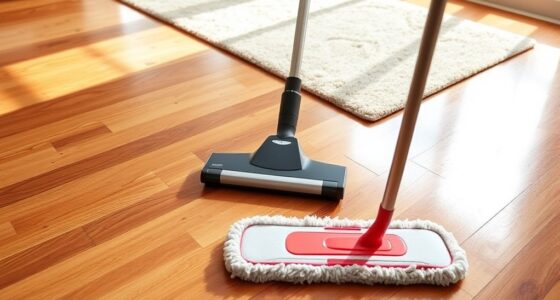
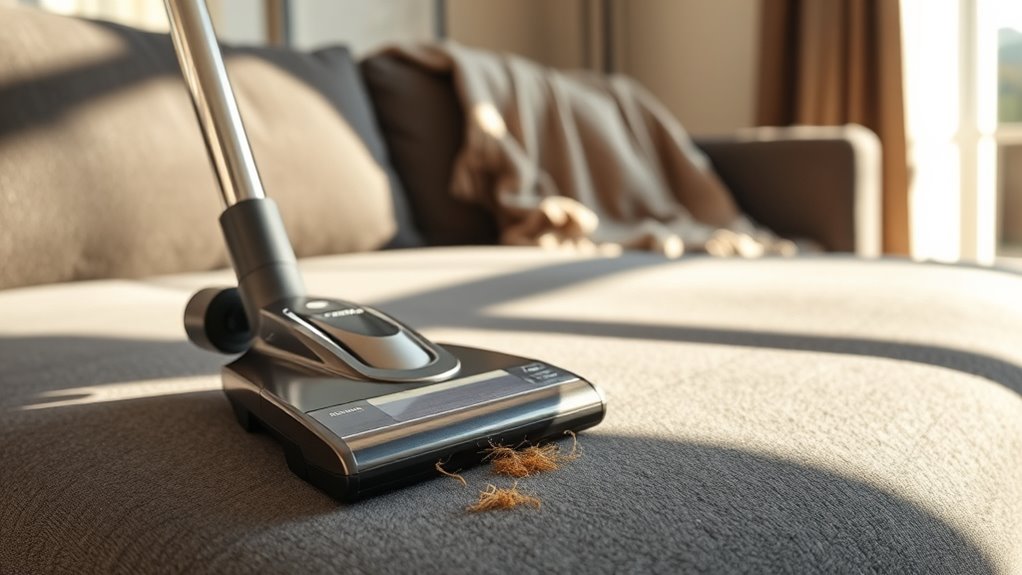
Start by selecting a vacuum cleaner that comes with a range of attachments. These vacuum attachments are essential for reaching those tricky spots on your couch or chair where hair loves to hide. Most vacuums come with a pet hair attachment or a brush nozzle that’s engineered to lift and trap hair effectively. If you don’t have these, consider investing in a vacuum that offers them. It’ll make your life so much easier when it comes to cleaning!
Selecting a vacuum with specialized attachments is key to effectively removing pet hair from your upholstery.
Before you *delve* into the cleaning process, take a moment to prepare your upholstery. Grab a lint roller or a rubber glove; both can be great tools for removing loose hair before you vacuum. Just run the lint roller over the fabric, or wear the glove and rub your hand over the surface. The friction will help lift the hair away, making your vacuuming more effective. This little step can save you time later on and give you a head start on tackling that stubborn pet hair.
When you’re ready to vacuum, make sure to use the right attachment. Switch to the pet hair tool, and start from the top of your upholstery, working your way down. This technique ensures that any hair you dislodge falls down to areas you’ve yet to clean. Use slow, deliberate strokes to allow the vacuum to pick up as much hair as possible. You might need to go over some areas multiple times, especially if the hair is particularly embedded in the fabric.
Don’t forget to check your vacuum’s filter and bag regularly. A clogged filter or a full bag can drastically reduce suction power, making it harder to remove that pesky pet hair. Cleaning tips like these can be *vital* to maintaining your vacuum’s effectiveness. Additionally, consider the tax implications of Gold IRAs as you think about your long-term investments; understanding these can help you manage your finances better while keeping your home clean.
Top picks for "remov hair upholstery"
Open Amazon search results for this keyword.
As an affiliate, we earn on qualifying purchases.
Frequently Asked Questions
Can I Use a Regular Vacuum for Pet Hair Removal?
Yes, you can use a regular vacuum for pet hair removal, but it might not be the most effective option. Many pet hair myths suggest that any vacuum works well, but you’ll find that specialized vacuums perform better. Make sure you’re also keeping up with vacuum maintenance; clean filters and empty bins improve suction. Investing in a vacuum designed for pet hair can save you time and frustration in the long run.
What Vacuum Attachments Are Best for Pet Hair?
For tackling pet hair, you’ll want to use specific attachment types that enhance your vacuum’s suction power. A motorized brush attachment effectively lifts hair from upholstery, while a rubber nozzle can attract and gather stubborn strands. Additionally, a crevice tool is great for tight spaces. Always check that the attachments fit your vacuum model to maximize efficiency. With the right tools, you’ll keep your furniture fur-free!
How Often Should I Vacuum Pet Hair From Upholstery?
You should vacuum pet hair from upholstery at least once a week, but if you have multiple pets or they shed frequently, consider doing it more often. Adjust your upholstery cleaning schedule based on how much hair you notice. Keeping a regular routine helps maintain your furniture’s appearance and reduces allergens. If you see a lot of hair accumulating, don’t hesitate to grab the vacuum sooner!
Are There Specific Vacuums Designed for Pet Owners?
Absolutely, there are vacuums crafted specifically for pet owners, like knights in shining armor for your upholstery cleaning battles. These machines excel at pet hair removal, featuring powerful suction and specialized attachments that tackle stubborn fur. You’ll find models with HEPA filters to capture allergens, making your home a sanctuary. Investing in one of these vacuums means you’re armed with the right tools to keep your furniture fur-free and fresh!
Can Vacuuming Remove Dander Along With Pet Hair?
Yes, vacuuming can effectively remove dander along with pet hair. When you’re using a vacuum with a HEPA filter, it captures those tiny allergens, helping with pet allergy management. To enhance your upholstery cleaning techniques, make sure to vacuum regularly and use attachments designed for upholstery. This way, you’ll not only get rid of hair but also reduce the dander that can trigger allergies, creating a healthier environment for you and your pets.
Conclusion
As you set out on your quest to reclaim your upholstery from the clutches of pet hair, think of yourself as a brave knight. With your trusty vacuum as your sword, you vanquish the pesky fur dragons hiding in the fabric. Each sweep brings you closer to a clean kingdom, where your furniture reigns free and fresh. So, don your armor, wield that vacuum, and let your home shine like a castle once more, free from the furry foes!